
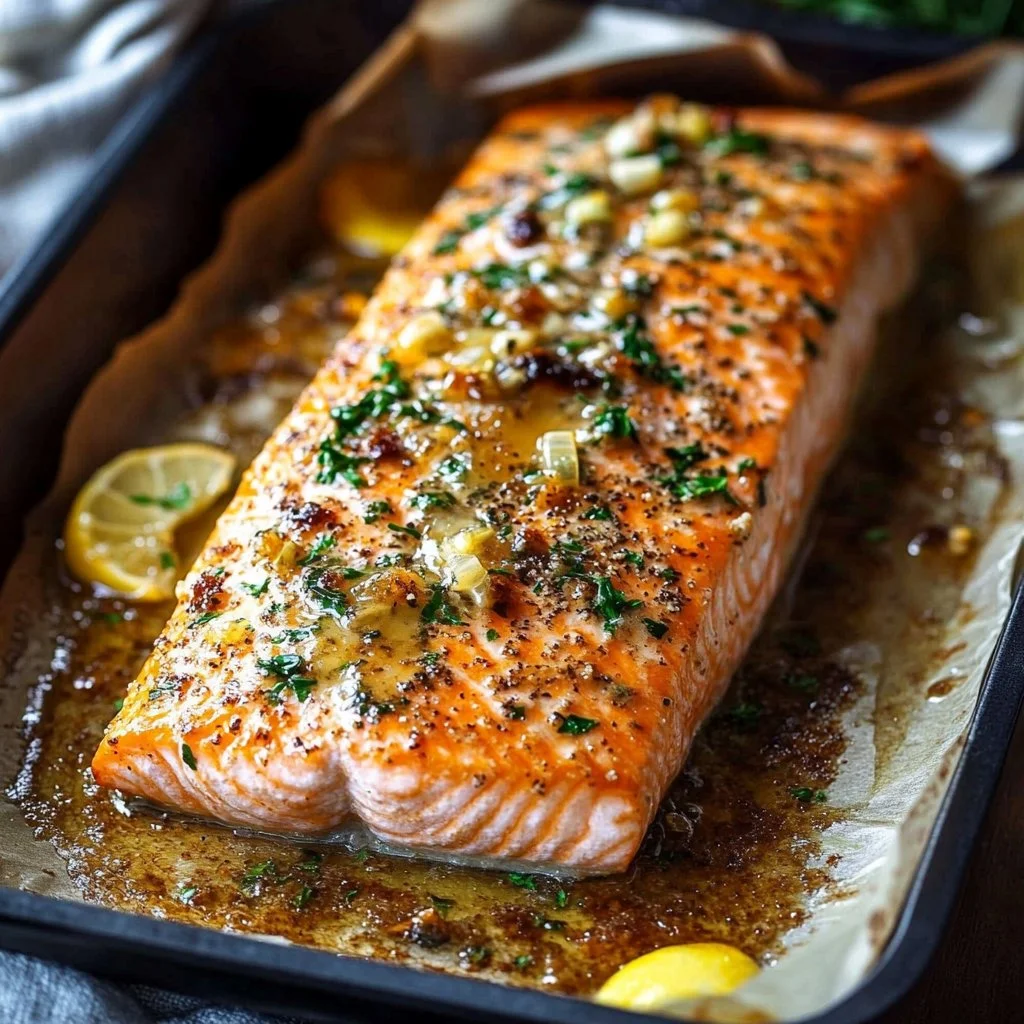
I’ve made this garlic-butter and brown-sugar salmon more times than I can count, and it’s one of those recipes that feels both special and effortless. A 2-pound, skin-on fillet gets a glossy garlic butter brush and a sweet-spiced crust that caramelizes in the oven. It’s an easy weeknight hero, great for a simple dinner, a date-night main, or when you want a crowd-pleasing dish with minimal fuss. If you enjoy bold garlic flavors paired with seafood, you might also like this spicy Cajun shrimp and salmon with garlic sauce for another quick seafood option.
What makes this recipe special
This salmon balances savory, sweet, and aromatic notes without requiring complicated steps. The brown sugar helps create a caramelized top while the garlic butter keeps the fillet moist and glossy. Using skin-on salmon protects the flesh during baking and makes it easier to transfer and slice.
“I served this at a small dinner and everyone asked for the recipe. The sugar gives the salmon a beautiful crust without being overpowering.” — a regular cook who simplified weeknight meals
This dish works for weeknight dinners, casual dinner parties, or when you want a healthy, protein-forward plate that still feels indulgent.
Step-by-step overview
- Preheat oven and prepare a lined rimmed baking sheet.
- Brush salmon with half the garlic butter.
- Combine brown sugar and spices and sprinkle evenly.
- Drizzle remaining butter over the top for moisture.
- Bake at 375°F until flaky and 145°F at the thickest point.
- Rest 5 minutes, slice, and serve.
This short map helps you move confidently through the recipe without surprises.
What you’ll need
- 1 (2-pound) whole salmon fillet, skin-on preferred (pin-boned if possible)
- 3 tablespoons melted butter or olive oil (olive oil is a dairy-free swap)
- 2 cloves garlic, minced
- 1 tablespoon brown sugar
- 1 teaspoon Italian seasoning
- 1 teaspoon ground paprika
- 1 teaspoon garlic powder
- 3/4 teaspoon salt
- Ground black pepper to taste
Notes: If you want to reduce sweetness, cut the brown sugar to 2 teaspoons. For a dairy-free version, use extra-virgin olive oil or a plant-based butter substitute. If your fillet is thicker than usual, plan for a few extra minutes of baking.
Cooking method
- Preheat the oven to 375°F and position the rack in the middle. A mid-rack placement cooks the salmon evenly.
- Lay a large piece of aluminum foil on a rimmed baking sheet and place the salmon skin-side down on the foil. Use a rimmed sheet to catch juices.
- In a small bowl, stir together the melted butter and minced garlic. Reserve half for finishing. Brush the other half evenly over the top of the salmon so the surface gets flavor and moisture.
- In another bowl, mix the brown sugar, Italian seasoning, paprika, garlic powder, salt, and a few grinds of black pepper. Sprinkle this spice-sugar blend evenly over the fillet, covering the flesh but not piling it up.
- Drizzle the remaining garlic butter over the seasoned salmon for added moisture and richer flavor. This helps the sugar caramelize without drying the fish.
- Bake in the preheated oven for 15 to 22 minutes depending on thickness. The salmon is done when it flakes easily with a fork and an instant-read thermometer reads about 145°F at the thickest part. Start checking at 15 minutes for thinner fillets.
- Remove from the oven and let the salmon rest for 5 minutes before slicing and serving. Resting lets juices redistribute so slices stay moist.
Best ways to enjoy it
Serve the salmon over a bed of herbed rice, buttered new potatoes, or a bright salad of mixed greens and citrus segments. For a warm side, sautéed green beans with lemon zest or roasted Brussels sprouts pair nicely. If you want a garlic-forward meal theme, consider pairing with a hearty dish like crockpot garlic-butter beef bites with potatoes for a weekend gathering where everyone loves garlic.
For plating, slice against the grain into thick portions, leaving the skin on each piece for texture that diners can remove if they prefer. Spoon any pan juices back over the top for shine and flavor.
Storage and reheating tips
Refrigerate cooked salmon in an airtight container within two hours of cooking. It will keep 3 to 4 days. To freeze, wrap tightly in plastic wrap and foil or use a vacuum sealer; frozen salmon is best within 2 to 3 months. Thaw overnight in the refrigerator.
Reheat gently: place slices in a single layer on a baking sheet, cover loosely with foil, and warm at 275°F until just heated through. Microwaving works in a pinch but can dry the fish; use short bursts and a cover.
Always discard any leftover seafood left out at room temperature for more than two hours to avoid foodborne illness.
Pro chef tips
- Pat the salmon dry with paper towels before applying butter. Dry skin and flesh allow for better browning.
- Keep the skin on for protection and easier handling. If the fillet still has pin bones, remove them with tweezers for a better dining experience.
- Use an instant-read thermometer to avoid overcooking; salmon continues to cook while resting. Aim for 140°F if you prefer slightly moister salmon, knowing it will rise to about 145°F during rest.
- If you like a stickier glaze, switch the oven to broil for 30 to 60 seconds at the end but watch closely to prevent burning.
- For even cooking, bring the fillet to room temperature for 15 to 20 minutes before it goes into the oven.
Flavor swaps
- Citrus-herb: Omit brown sugar and add lemon zest and chopped dill for a bright finish.
- Spicy-sweet: Mix a pinch of cayenne with the brown sugar and paprika for heat.
- Teriyaki-style: Replace brown sugar and paprika with a tablespoon of low-sodium soy sauce and a teaspoon of honey or brown sugar; brush near the end to avoid burning.
- Low-sodium: Reduce salt to 1/2 teaspoon and lift flavor with extra lemon and fresh herbs.
Common questions
How long does this recipe take from start to finish?
From prep to the table expect about 25 to 35 minutes. Prep takes 5 to 10 minutes and baking 15 to 22 minutes depending on thickness.
Can I use salmon fillets instead of a whole 2-pound piece?
Yes. Adjust baking time: small fillets (about 1-inch thick) will take closer to 10 to 12 minutes. Thicker fillets need the full 15 to 22 minutes.
Is it safe to eat salmon at 145°F?
USDA recommends cooking finfish to an internal temperature of 145°F. Many chefs prefer 125–135°F for medium doneness and accept the lower range when using high-quality, fresh fish. If you follow USDA guidelines, cook to 145°F.
Can I make this ahead and reheat for guests?
You can bake the salmon ahead and reheat gently in a 275°F oven covered with foil for 10 to 15 minutes. For best texture, bake no more than a few hours before serving and keep it tightly covered.
If you want other garlic-forward mains or inspiration for side dishes, check the linked recipes for complementary flavors.
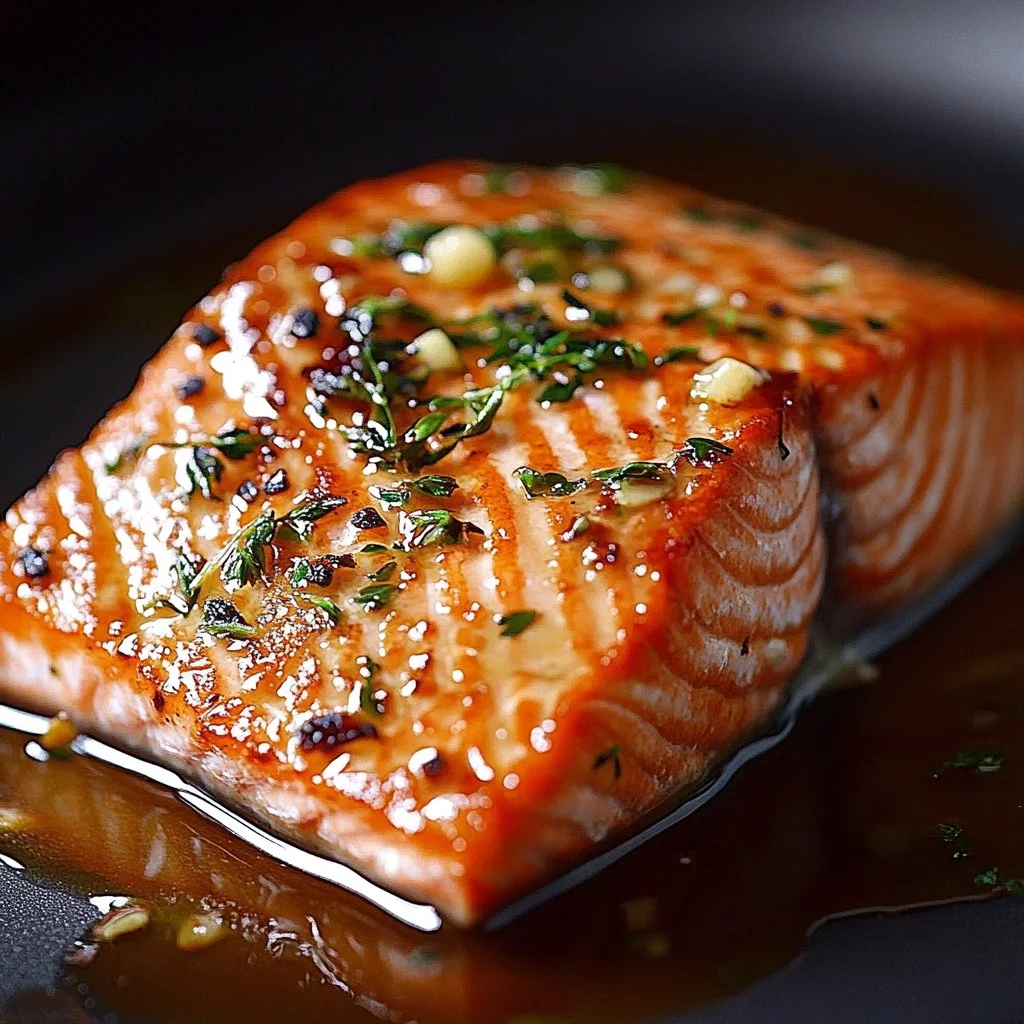
Garlic-Butter and Brown-Sugar Salmon
Ingredients
Method
- Preheat the oven to 375°F and line a rimmed baking sheet with aluminum foil.
- Place the salmon skin-side down on the foil.
- In a small bowl, combine melted butter and minced garlic. Reserve half for finishing and brush the other half onto the salmon.
- In another bowl, mix brown sugar, Italian seasoning, paprika, garlic powder, salt, and black pepper. Sprinkle this mixture evenly over the salmon.
- Drizzle the remaining garlic butter over the salmon.
- Bake in the preheated oven for 15 to 22 minutes, checking for doneness at 15 minutes.
- The salmon is done when it flakes easily with a fork and reaches an internal temperature of 145°F at the thickest part.
- Let the salmon rest for 5 minutes before slicing and serving.