
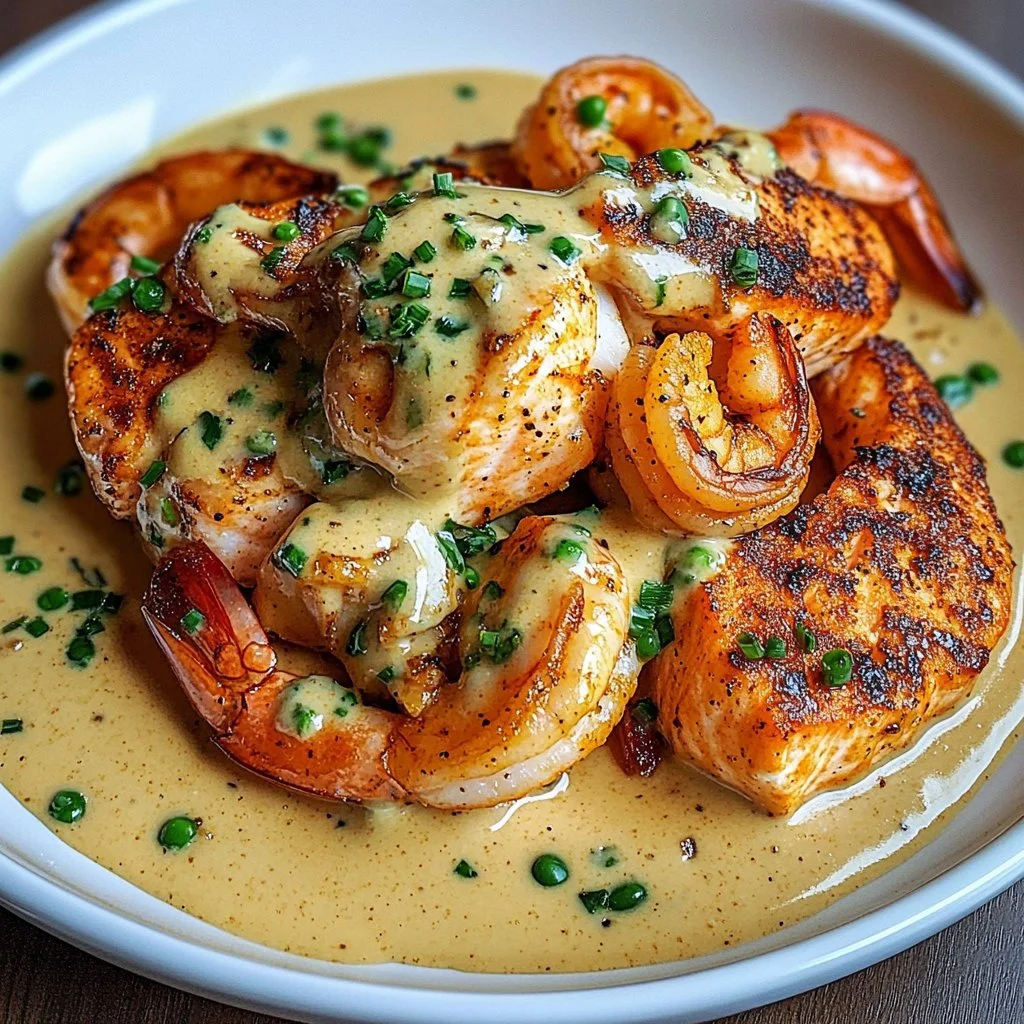
I made this Cajun shrimp and salmon with garlic cream sauce when I wanted a restaurant-worthy seafood dinner without the fuss. It’s a quick, satisfying meal where bold Cajun seasoning meets a silky garlic cream, all spooned over buttery mashed potatoes with crisp green beans on the side. If you enjoy rich, comforting sauces, this dish sits in the same comfort-food family as creamy chicken garlic Parmesan pasta, but with the bright, briny lift of seafood.
Why you’ll love this dish
This plate hits a lot of home-cook sweet spots: fast weeknight timing, minimal cleanup (one skillet for the seafood and sauce), and broad appeal — adults will love the spices and kids usually like the mashed potatoes and mild salmon. It’s also flexible: scale up for guests or simplify for a two-person dinner.
“Perfectly spiced shrimp, flaky salmon, and a sauce so good you’ll want extra bread — easy enough for a weeknight, impressive enough for company.”
Reasons to try it:
- Flavor contrast: smoky Cajun spice + creamy garlic sauce.
- Texture play: silky sauce, flaky salmon, snappy green beans, and creamy mash.
- Efficient cooking: seafood cooks fast; use the same skillet to build more flavor in the sauce.
- Family-friendly: can tame the heat or dial it up with extra red pepper flakes.
Preparing Cajun Shrimp and Salmon with Garlic Cream Sauce
Step-by-step overview
- Boil and mash the potatoes so they stay warm while you cook seafood.
- Season and quickly sear shrimp and salmon in a hot skillet; remove to rest.
- Use the same skillet to build a garlicky cream sauce, then return seafood to finish in the sauce.
- Blanch then sauté green beans with garlic for a bright, crunchy side.
- Plate mashed potatoes, top with seafood, spoon over sauce, and serve.
What you’ll need
- 4 large shrimp, peeled and deveined
- 2 salmon fillets (6 oz each), skin on or off
- 2 tablespoons Cajun seasoning (adjust to taste)
- 1 tablespoon olive oil
- 2 tablespoons butter (for seafood and sauce)
- 3 cloves garlic, minced (for sauce)
- 1 cup heavy cream
- 1/4 cup chicken broth (or low-sodium broth)
- 1 teaspoon Dijon mustard
- 1/4 teaspoon salt
- 1/4 teaspoon black pepper
- 1/4 teaspoon smoked paprika
- 4 medium russet potatoes, peeled and cut into chunks
- 1/2 cup milk
- 1/4 cup butter (for mashed potatoes)
- Salt and pepper for the potatoes
- 1 pound fresh green beans, trimmed
- 2 tablespoons butter (for sautéing green beans)
- 2 cloves garlic, minced (for green beans)
- 1/4 teaspoon red pepper flakes (optional)
Ingredient notes and substitutions:
- Heavy cream yields the richest sauce; for a lighter sauce use half-and-half plus an extra tablespoon of butter.
- Chicken broth adds depth; vegetable broth works if you prefer no meat-based broth.
- If you want lower-carb mashed potatoes, swap for mashed cauliflower (cook and mash the same way).
- Use thawed frozen shrimp if fresh isn’t available; pat very dry before searing.
Step-by-step instructions
- Prep and mash potatoes: Place potato chunks in a pot, cover with cold water, and bring to a boil. Simmer 15–20 minutes until fork-tender. Drain well, return to pot, add 1/4 cup butter and 1/2 cup milk, mash until smooth. Season with salt and pepper and keep warm.
- Season seafood: Pat shrimp and salmon dry with paper towels. Rub both sides with Cajun seasoning, pressing gently so it adheres.
- Sear the shrimp: Heat 1 tablespoon olive oil in a large skillet over medium-high heat. Add shrimp in a single layer and cook about 1–2 minutes per side until opaque and pink. Remove shrimp to a plate.
- Cook the salmon: In the same skillet, add a little butter if needed and place salmon fillets skin-side down (if skin on). Cook 3–4 minutes per side depending on thickness, until the salmon flakes easily. Remove to the plate with the shrimp.
- Make the garlic cream sauce: Reduce heat to medium. Melt 2 tablespoons butter in the skillet. Add 3 minced garlic cloves and cook 30–45 seconds until fragrant (don’t brown). Pour in 1 cup heavy cream and 1/4 cup chicken broth, whisk in 1 teaspoon Dijon mustard, 1/4 teaspoon salt, 1/4 teaspoon black pepper, and 1/4 teaspoon smoked paprika. Simmer 3–5 minutes, stirring, until slightly thickened.
- Finish seafood in the sauce: Return shrimp and salmon to the skillet and spoon sauce over them. Let everything warm through for 1–2 minutes so flavors marry. Taste and adjust seasoning.
- Cook green beans: Bring a pot of salted water to a boil, blanch green beans 2–3 minutes until bright green and slightly tender. Drain and immediately toss in a skillet with 2 tablespoons butter, 2 minced garlic cloves, and 1/4 teaspoon red pepper flakes (if using). Sauté 1–2 minutes until garlic is fragrant.
- Plate and serve: Spoon mashed potatoes onto plates, arrange salmon and shrimp on top, ladle garlic cream sauce over seafood, and add green beans alongside. Garnish with chopped parsley or lemon wedges if desired.
Best ways to enjoy it
How to plate and pair
- For an elegant plate, make a shallow well in the mashed potatoes and nestle the salmon there, surrounding with shrimp. Spoon the cream sauce over the center so it pools around the mash.
- Add a squeeze of lemon over the seafood right before serving to brighten the sauce.
- Serve with crusty bread or garlic bread to mop up extra sauce, or keep it light with a simple mixed green salad.
- If you want another creamy side, consider pairing with a similar-textured dish like creamy chicken garlic Parmesan pasta for a truly indulgent spread.
Storage and reheating tips
Keeping leftovers fresh
- Refrigerator: Store leftovers in airtight containers up to 2 days. Seafood textures degrade after that; eat within 48 hours.
- Freezing: You can freeze components separately. Mashed potatoes freeze best (up to 2 months). The cream sauce and seafood can be frozen for about 1 month, but salmon and shrimp may become softer once thawed.
- Reheating: Gently reheat the sauce and seafood together over low heat so the cream doesn’t separate. Use a microwave at 50% power in short intervals or warm on the stovetop, stirring. If sauce is too thick after chilling, whisk in a tablespoon of milk or broth.
- Food safety: Cool leftovers to room temperature for no more than 2 hours before refrigerating. Reheat to steaming hot throughout before serving.
Pro chef tips
- Dry seafood before seasoning: Moisture prevents a good sear. Pat with paper towels.
- Watch the heat: Sear on medium-high to get color, then reduce to medium when adding the sauce so cream doesn’t scorch.
- Rest the salmon: Let cooked salmon rest a minute off heat so juices redistribute and it stays moist.
- Control the spice: Start with 2 tablespoons Cajun seasoning for bold flavor. If serving kids, use 1 tablespoon and serve additional seasoning at the table.
- Thicken the sauce naturally: Reduce gently rather than adding flour; if you need faster thickening, whisk in a teaspoon of Dijon or a small butter-cold cube to emulsify.
Recipe variations
Creative twists
- Low-carb: Serve with mashed cauliflower and omit the potatoes.
- Dairy-free: Use full-fat coconut milk in place of heavy cream and a dairy-free butter substitute; note this changes the flavor profile.
- Extra heat: Add cayenne or increase red pepper flakes for a spicier finish.
- Different greens: Swap green beans for asparagus or sautéed spinach.
- Shellfish swap: Replace shrimp with scallops (sear 1–2 minutes per side) for a slightly sweeter bite.
Common questions
Can I use frozen shrimp or salmon?
Yes. Thaw overnight in the refrigerator or place vacuum-sealed packages under cold running water for quicker thawing. Pat completely dry before seasoning and searing to prevent steaming instead of browning.
How long does this dish take to make?
Active cook time is about 25–30 minutes once the potatoes are boiling. Potatoes take 15–20 minutes to cook; you can start them first and prep seafood while they cook to keep the total time around 35–40 minutes.
Can I make elements ahead of time?
You can make mashed potatoes up to a day ahead and reheat gently with a splash of milk. The sauce can be made and stored separately, then reheated and finished with freshly cooked seafood to preserve texture.
What internal temperature should salmon reach?
USDA recommends cooking salmon to 145°F for safety. Many cooks prefer 125–130°F for a moister center; if you choose a lower temperature, make sure you’re comfortable with the trade-off and source high-quality fish.
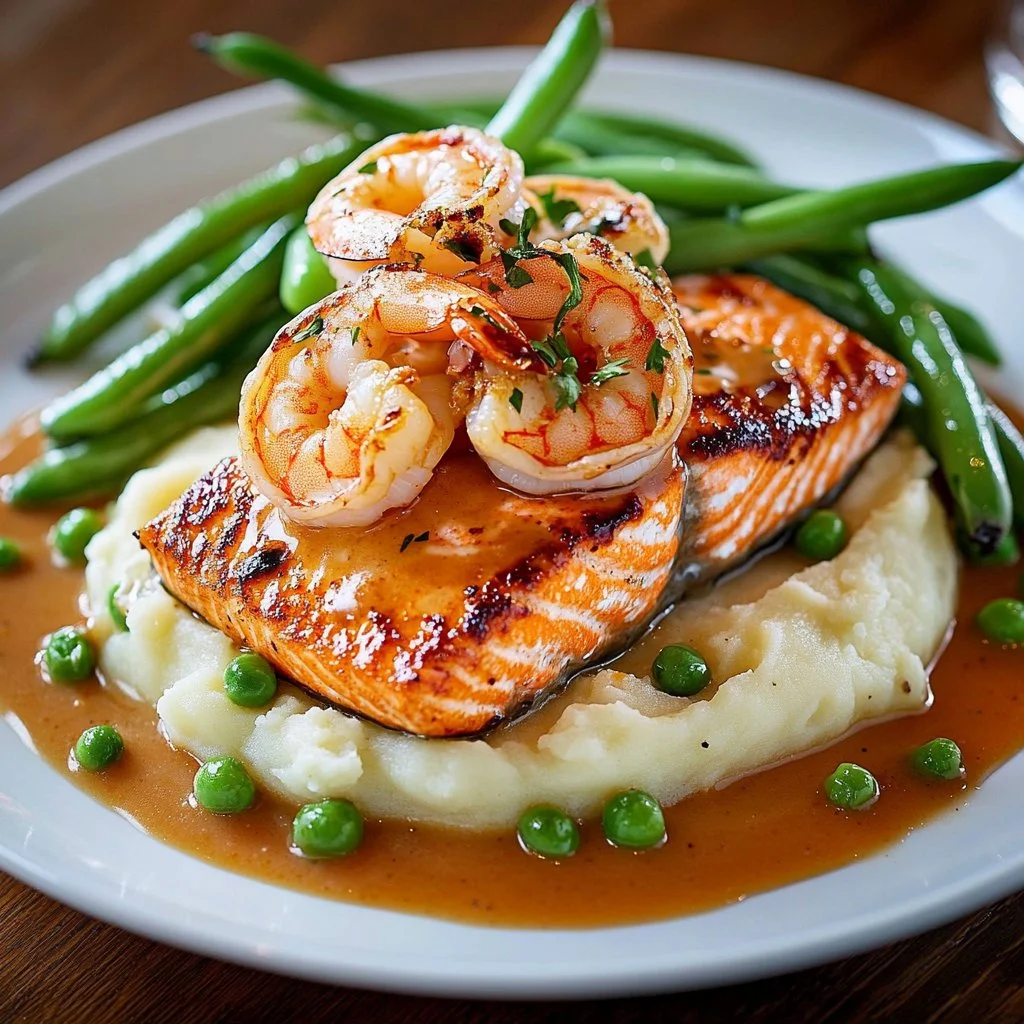
Cajun Shrimp and Salmon with Garlic Cream Sauce
Ingredients
Method
- Place potato chunks in a pot, cover with cold water, and bring to a boil. Simmer for 15–20 minutes until fork-tender.
- Drain well, return to pot, add 1/4 cup butter and 1/2 cup milk, and mash until smooth. Season with salt and pepper and keep warm.
- Pat shrimp and salmon dry with paper towels. Rub both sides with Cajun seasoning, pressing gently so it adheres.
- Heat 1 tablespoon olive oil in a large skillet over medium-high heat. Add shrimp in a single layer and cook for about 1–2 minutes per side until opaque and pink. Remove shrimp to a plate.
- In the same skillet, add a little butter if needed and place salmon fillets skin-side down (if skin on). Cook for 3–4 minutes per side until the salmon flakes easily. Remove to the plate with the shrimp.
- Reduce heat to medium. Melt 2 tablespoons butter in the skillet. Add 3 minced garlic cloves and cook for 30–45 seconds until fragrant, being careful not to brown.
- Pour in 1 cup heavy cream and 1/4 cup chicken broth, whisk in 1 teaspoon Dijon mustard, 1/4 teaspoon salt, 1/4 teaspoon black pepper, and 1/4 teaspoon smoked paprika. Simmer for 3–5 minutes, stirring, until slightly thickened.
- Return shrimp and salmon to the skillet and spoon sauce over them. Let everything warm through for 1–2 minutes so flavors marry. Taste and adjust seasoning.
- Bring a pot of salted water to a boil, blanch green beans for 2–3 minutes until bright green and slightly tender. Drain and immediately toss in a skillet with 2 tablespoons butter, 2 minced garlic cloves, and 1/4 teaspoon red pepper flakes if using. Sauté for 1–2 minutes until garlic is fragrant.
- Spoon mashed potatoes onto plates, arrange salmon and shrimp on top, ladle garlic cream sauce over seafood, and add green beans alongside. Garnish with chopped parsley or lemon wedges if desired.