
I still remember the first time I made this overnight French toast casserole for a lazy weekend morning — the kitchen smelled like cinnamon and vanilla, and everyone hovered around the oven waiting. This recipe turns a simple loaf of thick Texas toast into custardy, sliceable squares that are great for feeding a crowd or making ahead for busy mornings. If you enjoy richer bread bases, you might also like a similar take on brioche with even more buttery texture: overnight brioche French toast casserole.
Why you’ll love this dish
This casserole is a low-effort, high-reward breakfast or brunch solution. It soaks up a sweet custard overnight, giving you a tender interior and a lightly golden top after baking. It’s budget-friendly because it uses simple pantry staples, kid-approved thanks to familiar flavors (vanilla and cinnamon), and it’s perfect for holiday mornings, weekend brunches, or when you want an easy make-ahead meal for guests.
Step-by-step overview
You’ll layer thick Texas toast in a buttered 9×13 pan, whisk together eggs, milk, cream, sugar, vanilla, cinnamon, and salt, then pour the custard over the bread. Cover and chill so the bread fully absorbs the liquid — at least 4 hours, ideally overnight. Bake at 350°F until the top is golden and the center is set, then rest briefly before slicing. Expect about 45–50 minutes of bake time and minimal hands-on prep.
What you’ll need
- 1 loaf Texas toast, sliced thick
- 6 large eggs
- 2 cups milk (whole milk preferred)
- 1/2 cup heavy cream
- 1/4 cup granulated sugar
- 1 tablespoon vanilla extract
- 1 teaspoon ground cinnamon
- 1/4 teaspoon salt
- Butter for greasing the dish
- Maple syrup for serving
Notes: Use day-old or slightly stale Texas toast if you can — it soaks custard without collapsing. Whole milk plus cream gives the best texture; you can substitute all-milk (leave out the cream) for a lighter version.
Step-by-step instructions
- Preheat your mindset for an easy make-ahead dish and butter a 9×13-inch baking dish so the casserole releases easily.
- Arrange the Texas toast slices in a single even layer across the bottom of the dish. Overlap slightly if needed to fit the loaf.
- In a medium bowl, whisk the eggs until smooth. Add milk, heavy cream, sugar, vanilla, cinnamon, and salt. Whisk until fully combined and slightly frothy.
- Pour the custard evenly over the bread. Press the slices lightly so every piece soaks up some liquid.
- Tightly cover the dish with plastic wrap and chill for at least 4 hours; overnight is best for full flavor and texture.
- When ready to bake, remove the plastic wrap and preheat the oven to 350°F (175°C). Bake uncovered for 45 to 50 minutes, until the top is golden and the center no longer jiggles.
- Let the casserole rest 5 to 10 minutes before cutting into squares. Serve warm with maple syrup on the side.
How to plate and pair
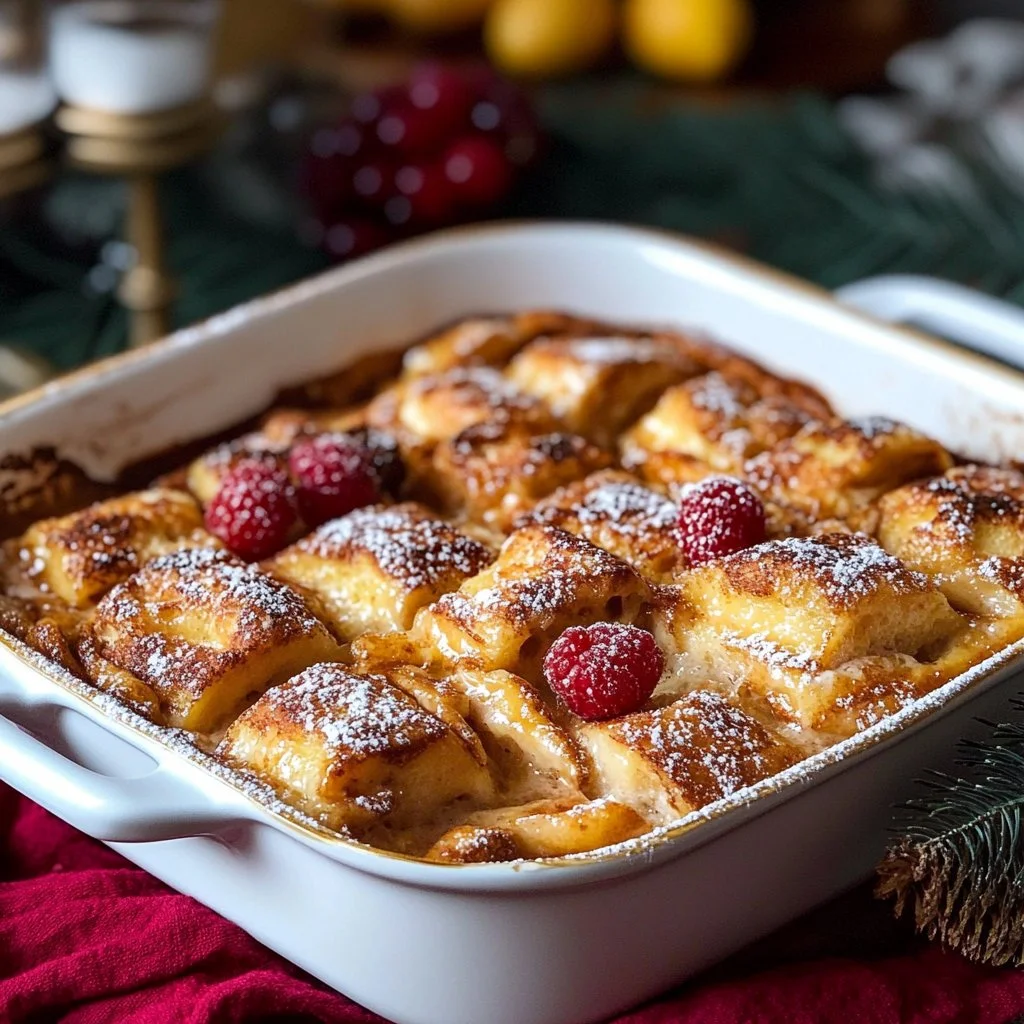
Serve slices on warmed plates and drizzle maple syrup just before eating so the top stays slightly crisp. Pair with fresh berries, whipped cream, or a dusting of powdered sugar for a pretty presentation. For a savory contrast, offer scrambled eggs or sautéed greens on the side for a balanced brunch spread.
Storage and reheating tips
Cool leftovers to room temperature, then refrigerate in an airtight container for up to 3–4 days. To reheat, warm individual squares in the microwave for 30–60 seconds or in a 350°F oven for 10–12 minutes until heated through. To freeze, wrap portions tightly in plastic wrap and foil, and freeze up to 2 months; thaw in the fridge overnight before reheating.
Food safety note: do not leave the assembled casserole at room temperature for more than two hours before refrigerating; the custard contains eggs and dairy and should be chilled promptly.
Pro chef tips
- Press the bread down gently after pouring the custard to encourage even absorption.
- If the top browns too quickly during baking, tent loosely with foil for the last 10–15 minutes.
- For extra richness, brush melted butter on the top five minutes before the end of baking.
- Use a toothpick in the center to check doneness; it should come out clean or with just a few moist crumbs, not wet custard.
Recipe variations
- Make it nutty: sprinkle chopped pecans or sliced almonds on top before baking for crunch.
- Make it fruit-forward: tuck thin apple slices between the bread layers for a warm apple twist.
- For a brighter version, add a teaspoon of orange zest to the custard.
If you prefer fruit-centered ideas, there’s a great recipe that highlights blueberries in a similar format you can use for inspiration: blueberry French toast casserole.
Helpful answers
How long should I let the casserole soak?
At least 4 hours will work, but overnight (8–12 hours) gives the best custard absorption and flavor. If you’re short on time, let it sit for 4 hours and press the bread occasionally to help it soak faster.
Can I use other bread besides Texas toast?
Yes. Brioche, challah, or thick-sliced white sandwich bread all work well. Drier, slightly stale bread will hold custard better than very fresh bread.
Can I prep this without plastic wrap or make it dairy-free?
You can cover with a reusable silicone lid or an oven-safe plate instead of plastic wrap. For a dairy-free version, substitute full-fat coconut milk for the milk and leave out heavy cream or use a coconut cream alternative; texture will be slightly different but still delicious.
Overnight French Toast Casserole
Ingredients
Method
- Preheat your mindset for an easy make-ahead dish and butter a 9x13-inch baking dish.
- Arrange the Texas toast slices in a single even layer across the bottom of the dish.
- In a medium bowl, whisk the eggs until smooth. Add milk, heavy cream, sugar, vanilla, cinnamon, and salt, whisking until fully combined.
- Pour the custard evenly over the bread, pressing lightly to ensure absorption.
- Cover the dish with plastic wrap and chill for at least 4 hours; ideally overnight.
- Remove the plastic wrap and preheat the oven to 350°F (175°C).
- Bake uncovered for 45 to 50 minutes, until the top is golden and the center is set.
- Let the casserole rest for 5 to 10 minutes before cutting into squares.