
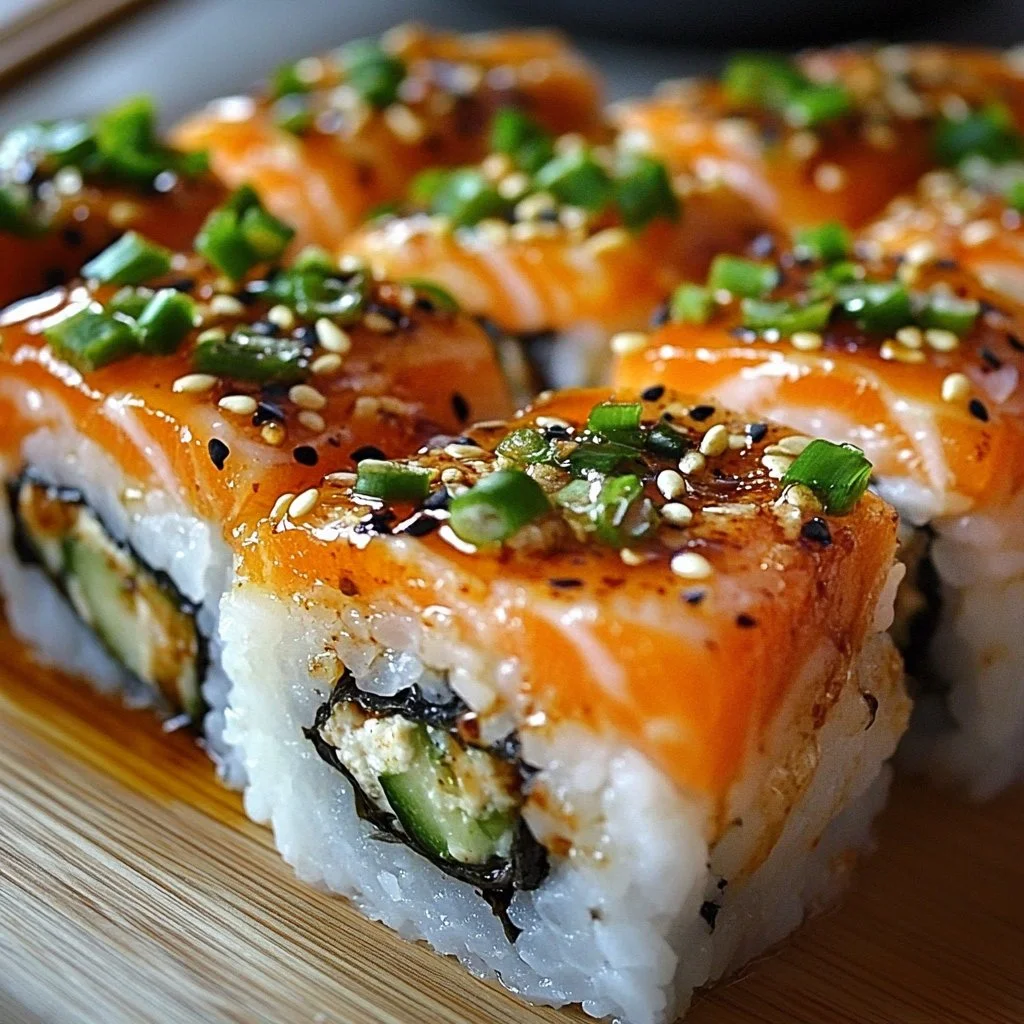
I still remember the first time I made this spicy salmon sushi bake for a dinner party — it disappeared faster than I could plate it. This dish takes all the flavors you love from spicy salmon rolls and turns them into a warm, shareable casserole that’s perfect for busy weeknights, potlucks, or a low-effort date-night meal. It’s creamy, a little spicy, and great for people who like sushi flavors without rolling rice. If you like easy brunch or crowd-pleasing bakes, you might also enjoy this simple baked feta eggs recipe for a different kind of savory brunch hit.
Why you’ll love this dish
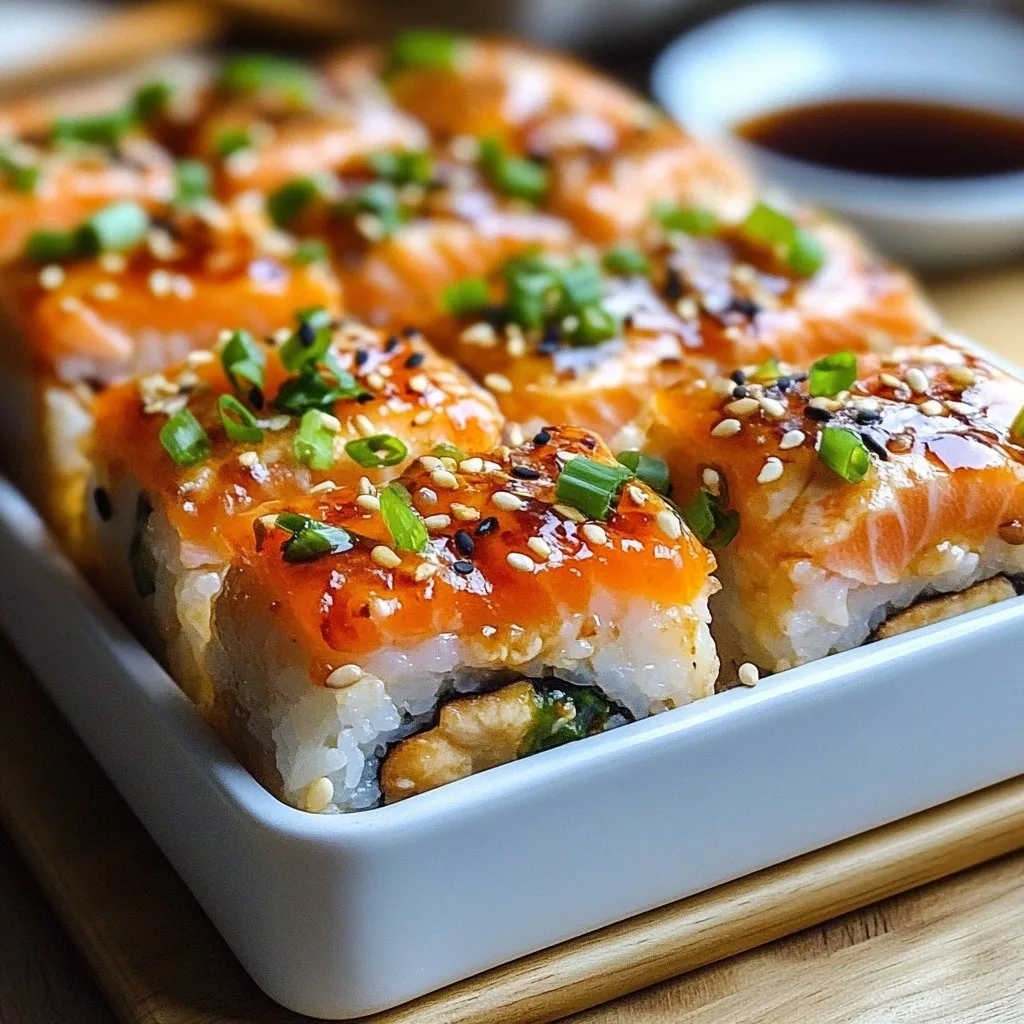
This spicy salmon sushi bake balances comfort and freshness. The rice gives structure, the mayo-Sriracha mix adds richness and heat, and a quick bake gives the salmon a slightly caramelized top while keeping it tender inside. It’s fast to assemble, scales well for guests, and uses familiar pantry ingredients.
- Weeknight-friendly: Most of the work is quick prep and rice cooking.
- Crowd-pleasing: Scoop-and-serve format makes it party-proof.
- Customizable heat: Easily dial Sriracha up or down.
- Less fuss than rolling sushi: All the taste, none of the labor.
“A sushi-restaurant favorite at home — creamy, spicy, and addictively simple. Perfect for feeding a hungry group.” — A recent dinner guest
Preparing Spicy Salmon Sushi Bake
Step-by-step overview
- Cook and season sushi rice.
- Spread rice in a baking dish and let it cool slightly.
- Mix diced salmon with mayo, Sriracha, sesame oil, and green onions.
- Spread the salmon mix over the rice.
- Bake until the top is golden and the salmon is cooked through.
- Garnish with extra green onion, nori strips, and tobiko if you like.
Gather these items
- 2 cups sushi rice (uncooked)
- 2.5 cups water
- 1/4 cup rice vinegar
- 2 tablespoons sugar
- 1 teaspoon salt
- 1 lb fresh salmon fillet (skinless and diced)
- 1/2 cup mayonnaise (use Japanese mayo like Kewpie for extra umami)
- 2 tablespoons Sriracha sauce (or to taste)
- 1 teaspoon sesame oil
- 1/2 cup green onions (chopped, plus extra for garnish)
- 1 sheet nori (cut into small strips)
- Tobiko (optional for garnish)
Notes and substitutions
- If you prefer a lighter binder, swap half the mayo for Greek yogurt. The texture will be tangier.
- For a budget version, cooked canned salmon can work, but drain and flake well, then reduce bake time.
- To make this gluten-free, confirm your Sriracha or additional sauces are gluten-free.
How to prepare it
- Preheat the oven to 375°F (190°C).
- Rinse the sushi rice under cold water until the water runs mostly clear.
- Combine rinsed rice and 2.5 cups water in a rice cooker or pot. Cook until tender, then let rest 10 minutes.
- Whisk rice vinegar, sugar, and salt until dissolved. Gently fold the mixture into the hot rice. Fluff with a fork and let cool slightly.
- Spread the seasoned rice in an even layer across the bottom of a 9×13-inch baking dish. Let it cool for a few minutes so the toppings don’t melt.
- In a bowl, combine diced salmon, mayonnaise, Sriracha, sesame oil, and chopped green onions. Taste and adjust heat.
- Spread the salmon mixture evenly over the rice layer.
- Bake 25 to 30 minutes, or until the salmon is cooked through and the top has a light golden color.
- Let rest a few minutes. Garnish with extra green onions, nori strips, and tobiko. Serve warm, scooping portions with a spoon.
What to serve it with
Best ways to enjoy it
- Light sides: A simple cucumber-sesame salad or quick pickled ginger brightens the bake.
- Soups: Miso soup warms the palate without competing with the flavors.
- Vegetables: Steamed edamame or a sesame green beans salad add texture and color.
If you want to serve a heartier protein or grill option with this for a larger spread, try pairing it with garlic-forward skewers like these garlic parmesan chicken skewers for variety on the table.
Storage and reheating tips
Keeping leftovers fresh
- Refrigerate: Place cooled leftovers in an airtight container and refrigerate within two hours of baking. Consume within 2 to 3 days.
- Freeze: You can freeze portions wrapped tightly for up to 1 month. Texture of the rice may change slightly on thawing.
- Reheat: Warm individual portions in a 325°F (160°C) oven for 10 to 15 minutes until heated through. Microwaving works for convenience; cover loosely and heat in short bursts to avoid drying the salmon.
- Food safety: Always reheat until steaming hot. Do not leave cooked seafood at room temperature for more than two hours.
Pro chef tips
- Cut the salmon into uniform small dice so it cooks evenly.
- Pat the salmon dry before mixing to avoid a watery topping.
- Use room-temperature rice when spreading; it helps the top brown rather than steaming.
- If you like a slightly charred top, broil for 1 to 2 minutes at the end, watching carefully.
- Don’t overwork the salmon mixture. Gentle folding keeps the texture tender.
- If serving to guests who prefer less spice, spoon a little of the salmon mix into a separate bowl and add Sriracha to taste for individual customization.
- If you worry about raw fish safety, buy salmon labeled sushi-grade or use fully cooked salmon for peace of mind.
Creative twists
- Spicy tuna: Swap salmon for sushi-grade tuna and proceed the same way.
- Crab-style: Use flaked imitation crab (kani) with a touch of toasted sesame oil for a California-style bake.
- Vegetarian: Sauté mushrooms or use marinated tofu cubes with a miso-mayo mix.
- Crunchy finish: Sprinkle tempura flakes or toasted panko on top right before serving.
- Citrus note: Add a little yuzu kosho or grated lemon zest to the mayo mix for bright acidity.
- Individual portions: Use ramekins for single-serving bakes, adjusting bake time down slightly.
Common questions
Can I use raw salmon instead of cooking it in the oven?
Yes, but exercise caution. Traditional sushi uses raw salmon that is sashimi-grade; if you plan to keep it raw, buy sushi-grade salmon and serve immediately after assembling. The recipe as written bakes the salmon, which cooks it through and reduces food-safety concerns.
How long does this keep in the fridge?
Store in an airtight container and eat within 2 to 3 days. Because this dish contains cooked seafood and mayo, keep it chilled and reheat fully before eating.
Can I make this ahead for a party?
You can make up to the point of baking: assemble the rice and salmon layers, cover, and refrigerate for a few hours. Bake just before guests arrive to get the best texture and a golden top.
What else can I use if I don’t have sushi rice?
Short-grain rice works best for the sticky texture. Medium-grain rice is the next best option. Long-grain rice will be drier and won’t hold the layers as well.
If you want more ideas for easy oven-baked crowd-pleasers or portable appetizers, I can suggest menu pairings and timing tips for a full spread.
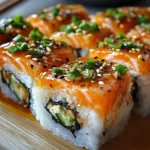
Spicy Salmon Sushi Bake
Ingredients
Method
- Preheat the oven to 375°F (190°C).
- Rinse the sushi rice under cold water until the water runs mostly clear.
- Combine rinsed rice and 2.5 cups water in a rice cooker or pot. Cook until tender, then let rest for 10 minutes.
- Whisk rice vinegar, sugar, and salt until dissolved. Gently fold the mixture into the hot rice. Fluff with a fork and let cool slightly.
- Spread the seasoned rice in an even layer across the bottom of a 9×13-inch baking dish. Let it cool for a few minutes to prevent the toppings from melting.
- In a bowl, combine diced salmon, mayonnaise, Sriracha, sesame oil, and chopped green onions. Taste and adjust heat.
- Spread the salmon mixture evenly over the rice layer.
- Bake for 25 to 30 minutes, or until the salmon is cooked through and the top has a light golden color.
- Let rest for a few minutes. Garnish with extra green onions, nori strips, and tobiko. Serve warm, scooping portions with a spoon.