

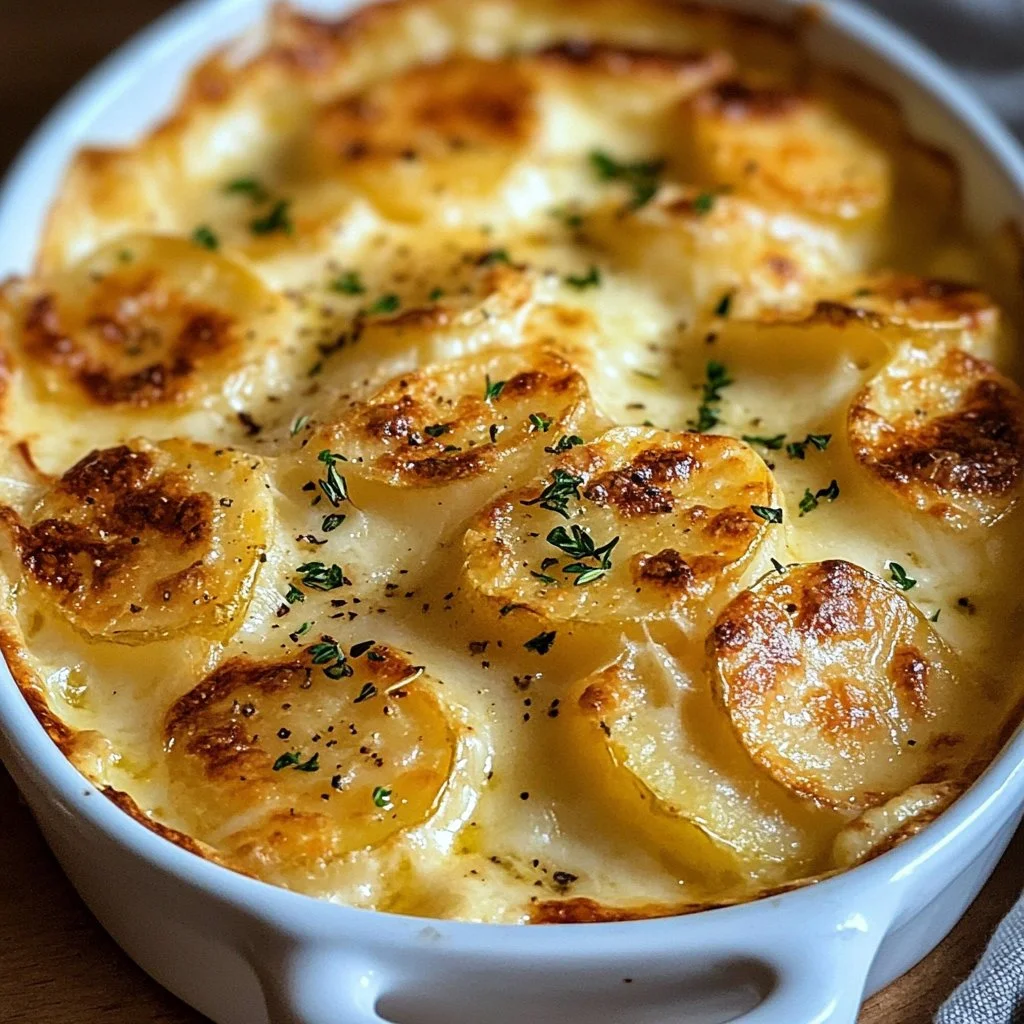
I remember the first time I made these scalloped potatoes: thin, tender russet slices bathed in a silky cheddar sauce that clung to every edge. This is a classic, comforting casserole that works for lazy weeknights, potlucks, or any meal when you want something crowd-pleasing and simple to assemble. If you like creamy potato sides that hold their shape on the plate, this recipe delivers — and it pairs especially well with roasted or sauced mains, such as cheesy garlic potatoes alongside grilled chicken when you want an all-around satisfying dinner.
Why you’ll love this dish
Scalloped potatoes feel fancy but are easy to pull together. A few reasons to make this at home:
- Uses inexpensive pantry staples and plain potatoes for a high-comfort payoff.
- The stovetop cheese sauce is quick, forgiving, and coat-every-slice satisfying.
- It scales well for company or for leftovers that reheat beautifully.
- Gentle onion rings add sweet aroma without overpowering the potatoes.
"Creamy without being gloopy, with a golden top that makes every bite a tiny celebration." — a quick review from a regular dinner guest
Step-by-step overview
Before you dive in, here’s the quick workflow so you know what to expect:
- Prep: peel and slice potatoes and slice one onion into rings.
- Build: layer potatoes and onions in a buttered 9×13 pan, seasoning each layer.
- Sauce: make a butter-and-flour roux, whisk in milk until thick, then melt in most of the cheddar.
- Bake: pour sauce over the layered potatoes, cover and bake until tender, then uncover to brown the top.
- Rest: let the casserole sit 10 minutes so slices hold their shape before serving.
What you’ll need
- 4 russet potatoes (peeled and sliced into 1/4-inch slices; about 2 pounds) — russets give a nice starchy structure
- 1 yellow onion (sliced into rings)
- 3 tablespoons unsalted butter
- 3 tablespoons all-purpose flour
- 1/2 teaspoon kosher salt (plus more to taste)
- 2 cups whole milk, room temperature (substitute: 2% for lighter texture; use an unsweetened plant milk for dairy-free but expect a different flavor)
- 1 1/2 cups mild cheddar cheese, shredded (substitute: sharp cheddar for more bite or mix with Monterey Jack for extra melt)
- Salt and freshly ground black pepper to taste
Notes: Slice potatoes uniformly (a mandoline makes this faster and more consistent). Let milk come to room temperature so the sauce thickens smoothly and resists curdling.
How to prepare it
- Preheat the oven to 375°F (190°C). Lightly butter or spray a 9×13-inch baking dish.
- Layer potato slices across the bottom of the dish. Scatter a few onion rings over the potatoes and season lightly with salt and pepper. Repeat layers until all potatoes and onions are used.
- In a medium saucepan set over medium heat, melt the butter. Add the flour and whisk constantly for 1 to 2 minutes to form a roux. Keep it light in color; do not let it brown.
- Slowly pour in the milk while whisking to prevent lumps. Continue whisking until the sauce thickens and just begins to bubble, about 4 to 6 minutes.
- Remove the pan from the heat. Stir in the 1/2 teaspoon kosher salt and most of the shredded cheddar, reserving a handful for the top. Taste and adjust seasoning with salt and pepper.
- Pour the cheese sauce evenly over the layered potatoes. Use a spatula to nudge sauce into gaps so the slices are well coated. Sprinkle the reserved cheddar over the surface.
- Cover the dish tightly with foil and bake 45 to 55 minutes, or until a knife slides into the potatoes with little resistance.
- Remove the foil and bake 10 to 15 minutes more to brown the top. Let the casserole rest 10 minutes before serving so the sauce sets and the slices hold their shape.
Best ways to enjoy it
These scalloped potatoes are rich and pair well with lighter mains and bright vegetables. Try serving with a lemony green salad to cut the richness or roasted root vegetables for an autumn spread. For a simple weeknight plate, they complement roasted or pan-seared chicken breasts, especially dishes like creamy herb chicken with mashed potatoes where the textures and flavors echo each other.
Plating idea: slice into neat portions with a thin spatula and garnish with chopped chives or parsley to add color and freshness.
Storage and reheating tips
- Refrigerator: Store leftovers in an airtight container or cover the baking dish tightly. Keep for up to 3 to 4 days.
- Reheat: Warm individual portions in a microwave for 1 to 2 minutes, or reheat a whole dish in a 350°F (175°C) oven until heated through, about 20 to 30 minutes. Cover with foil if the top is browning too quickly.
- Freezing: You can freeze fully cooled portions in freezer-safe containers for up to 2 months. Thaw overnight in the refrigerator before reheating. Note: texture may change slightly after freezing.
- Food safety: Do not leave the casserole at room temperature for more than two hours. Reheat leftover portions to 165°F (74°C) before serving.
Pro chef tips
- Uniform slicing is key: 1/4-inch slices cook evenly. A mandoline or sharp chef’s knife speeds the job.
- Keep the roux pale: whisk the flour and butter just enough to cook out the raw flour taste but not so long that it darkens.
- Warm milk helps: using room-temperature milk cuts the time the sauce needs to thicken and reduces lumping.
- Adjust cheese at the end: reserve some cheese for the top so you get a golden finish without over-salting the sauce.
- Let it rest: resting helps the sauce thicken and makes cleaner slices when serving.
Recipe variations
- Extra herbs: stir a teaspoon of Dijon mustard and a tablespoon of chopped fresh thyme into the sauce for an herbal lift.
- Creamier finish: swap half the milk for light cream for a silkier sauce.
- Add vegetables: scatter blanched broccoli florets or thinly sliced leeks between layers for color and flavor.
- Vegetarian protein: top finished portions with sautéed mushrooms and onions for a meaty texture without meat.
Common questions
How long does it take to prep and cook?
Active prep time is about 20 to 30 minutes (mostly slicing). Bake time is 55 to 70 minutes including browning, plus a 10-minute rest. Total time is roughly 1 hour 30 minutes end to end.
Can I use a different potato?
Yes. Russets are recommended for their starchy texture and ability to hold shape, but Yukon Golds work too and create a slightly creamier, less fluffy interior.
How do I avoid watery scalloped potatoes?
Salt the slices lightly as you layer them and pat excess moisture if potatoes are overly wet. Make sure the sauce is thick before pouring; an under-thickened sauce thins further while baking.
Is there a dairy-free version?
You can use an unsweetened plant milk and a dairy-free butter substitute, but the flavor and melting qualities will differ. Use a dairy-free shredded cheese designed to melt for best texture.
If you want another rich stovetop-style side to pair with weeknight mains, I can suggest more recipes or swaps.

Scalloped Potatoes
Ingredients
Method
- Preheat the oven to 375°F (190°C). Lightly butter or spray a 9x13-inch baking dish.
- Layer potato slices across the bottom of the dish. Scatter a few onion rings over the potatoes and season lightly with salt and pepper. Repeat layers until all potatoes and onions are used.
- In a medium saucepan set over medium heat, melt the butter. Add the flour and whisk constantly for 1 to 2 minutes to form a roux. Keep it light in color; do not let it brown.
- Slowly pour in the milk while whisking to prevent lumps. Continue whisking until the sauce thickens and just begins to bubble, about 4 to 6 minutes.
- Remove the pan from the heat. Stir in the 1/2 teaspoon kosher salt and most of the shredded cheddar, reserving a handful for the top. Taste and adjust seasoning with salt and pepper.
- Pour the cheese sauce evenly over the layered potatoes. Use a spatula to nudge sauce into gaps so the slices are well coated. Sprinkle the reserved cheddar over the surface.
- Cover the dish tightly with foil and bake for 45 to 55 minutes, or until a knife slides into the potatoes with little resistance.
- Remove the foil and bake for 10 to 15 minutes more to brown the top. Let the casserole rest for 10 minutes before serving so the sauce sets and the slices hold their shape.