
I first baked these Kentucky Butter Cake Cookies on a rainy afternoon when I wanted the tender crumb of the classic cake in cookie form. The result is a buttery, cakey cookie with a sticky, vanilla-scented glaze that soaks in and keeps every bite moist. If you love simple bakery-style sweets that travel well to potlucks or disappear fast at coffee hour, this recipe delivers. For a buttery cake cousin to compare technique and texture, I sometimes cross-reference a French butter cake while testing oven times.
What makes this recipe special
Kentucky butter cake transformed into a cookie keeps everything people adore about the cake — rich butter flavor, tender crumb, and a glossy sugar glaze — but in a quick, handheld form. These cookies are:
- Fast to mix and bake, great for last-minute guests.
- Kid-approved and sturdy enough to pack for lunchboxes.
- Budget-friendly: pantry staples with a small, simple glaze that elevates the flavor.
They shine at brunches, neighborhood swaps, or anytime you want the comfort of cake without slicing.
Step-by-step overview
You’ll cream butter and two sugars, add eggs and extracts, fold in flour with baking powder and salt, scoop dough into evenly sized rounds, bake until the edges just color, then brush a warm butter-sugar glaze so it sinks into each cookie. The process is straightforward, and the glaze is what turns a plain butter cookie into a moist, cake-like treat.
What you’ll need
- 2 ½ cups all-purpose flour
- 1 cup granulated sugar (plus ¾ cup for glaze)
- ½ cup powdered sugar
- 1 cup unsalted butter, softened (plus ½ cup unsalted butter for glaze)
- 2 large eggs
- 1 tsp vanilla extract
- 1 tsp butter extract (optional for extra buttery aroma)
- 1 tsp baking powder
- ¼ tsp salt
- ¼ cup water (for glaze)
Ingredient notes and swaps:
- Powdered sugar adds tenderness; don’t skip it.
- If you only have salted butter, reduce added salt slightly.
- For a lighter texture, substitute ¼ cup of the flour with cake flour.
- Use real vanilla for best flavor; butter extract is optional but boosts that buttery note.
Directions to follow
- Preheat the oven to 350°F (175°C). Line baking sheets with parchment paper.
- In a large bowl, cream the 1 cup softened butter with 1 cup granulated sugar and ½ cup powdered sugar until light and fluffy, about 2 to 3 minutes with a stand mixer or a bit longer by hand.
- Beat in the eggs one at a time, scraping the bowl between additions. Stir in 1 tsp vanilla and 1 tsp butter extract if using.
- In a separate bowl, whisk together 2 ½ cups flour, 1 tsp baking powder, and ¼ tsp salt.
- Fold the dry ingredients into the wet just until combined. Avoid overmixing to keep the cookies tender.
- Scoop uniform balls of dough (about 1.5 tablespoons each) and place them on the prepared sheets, spacing them about 2 inches apart. Flatten each ball slightly with your palm or the bottom of a glass.
- Bake for 10 to 12 minutes, or until the edges are lightly golden but centers still look soft.
- While the cookies bake, make the glaze: melt ½ cup butter in a small saucepan. Add ¾ cup granulated sugar and ¼ cup water, stirring over low heat until the sugar dissolves and the mixture is smooth. Remove from heat and stir in 1 tsp vanilla extract.
- When the cookies come out of the oven, brush the warm glaze over the top of each cookie so it soaks in. Let cookies cool on the sheet until set, then transfer to a cooling rack to finish cooling completely.

Best ways to enjoy it
These cookies are perfect with a steaming cup of coffee or a milky tea. For a dessert plate, serve two cookies with a dollop of whipped cream and a few fresh berries. They also work well on a cookie platter for brunch, or paired with fruit compote for an afternoon treat. If you want a playful contrast, serve them alongside a scoop of vanilla ice cream while the glaze is still tacky.
Storage and reheating tips
Store cooled cookies in an airtight container at room temperature for up to 4 days. Place parchment between layers to prevent sticking. For longer storage, freeze in a single layer on a sheet tray until firm, then stack in a freezer-safe container up to 3 months. Thaw at room temperature. To refresh the glaze and warmth, microwave a cookie for 6 to 10 seconds on a microwave-safe plate, or warm in a 300°F (150°C) oven for 3 to 5 minutes.
Food safety note: these cookies contain eggs. If you make them ahead, keep them refrigerated if you plan to store for more than a day in warm climates, and discard if left at room temperature more than 2 hours.
Pro chef tips
- Bring butter to room temperature but not greasy; it should dent easily.
- Weigh or level your flour for consistent results; too much flour dries the cookies.
- Use an ice cream scoop for even sizes so baking is uniform.
- Don’t overbake; pull them when centers are set and edges just color. They firm up as they cool.
- Brush glaze while cookies are warm so it absorbs into the crumb rather than staying only on top.
Creative twists
- Add 1 tsp lemon zest to the dough and 1 tsp lemon juice to the glaze for a citrus lift.
- Stir ½ cup finely chopped toasted pecans into the dough for crunch.
- Swap half the granulated sugar in the dough for light brown sugar for a deeper caramel note.
- For a chocolate-kissed version, gently fold ¼ cup cocoa powder into the dry mix and skip the glaze.
- For nut-free bar cookie inspiration, try pairing these with a chocolate-dipped edge or a sprinkle of sea salt on the glaze; also see a bold cookie variation like the peanut butter brownie swirl cookies for different flavor pairing ideas.
Common questions
How long do these cookies take from start to finish?
Plan for about 30 to 40 minutes total: 10 minutes to mix, 10 to 12 minutes baking per batch, plus cooling and glazing. Active time is roughly 20 minutes.
Can I make the dough ahead of time?
Yes. Refrigerate shaped dough balls for up to 24 hours on a sheet tray covered with plastic wrap. Add 1 to 2 minutes to the bake time if baking straight from the fridge.
Can I skip the glaze?
You can, but the glaze is key to the cake-like moisture and shine. If you prefer less sweetness, brush with a thin syrup of equal parts water and granulated sugar instead of the full butter-sugar glaze.
Are these safe to freeze?
Yes. Freeze fully cooled cookies in a single layer until firm, then stack with parchment between layers in a freezer container for up to 3 months. Thaw at room temperature.
My glaze crystallized. What happened?
If the glaze cools too quickly or wasn’t stirred until fully dissolved, sugar can recrystallize. Rewarm gently and stir until smooth before brushing.
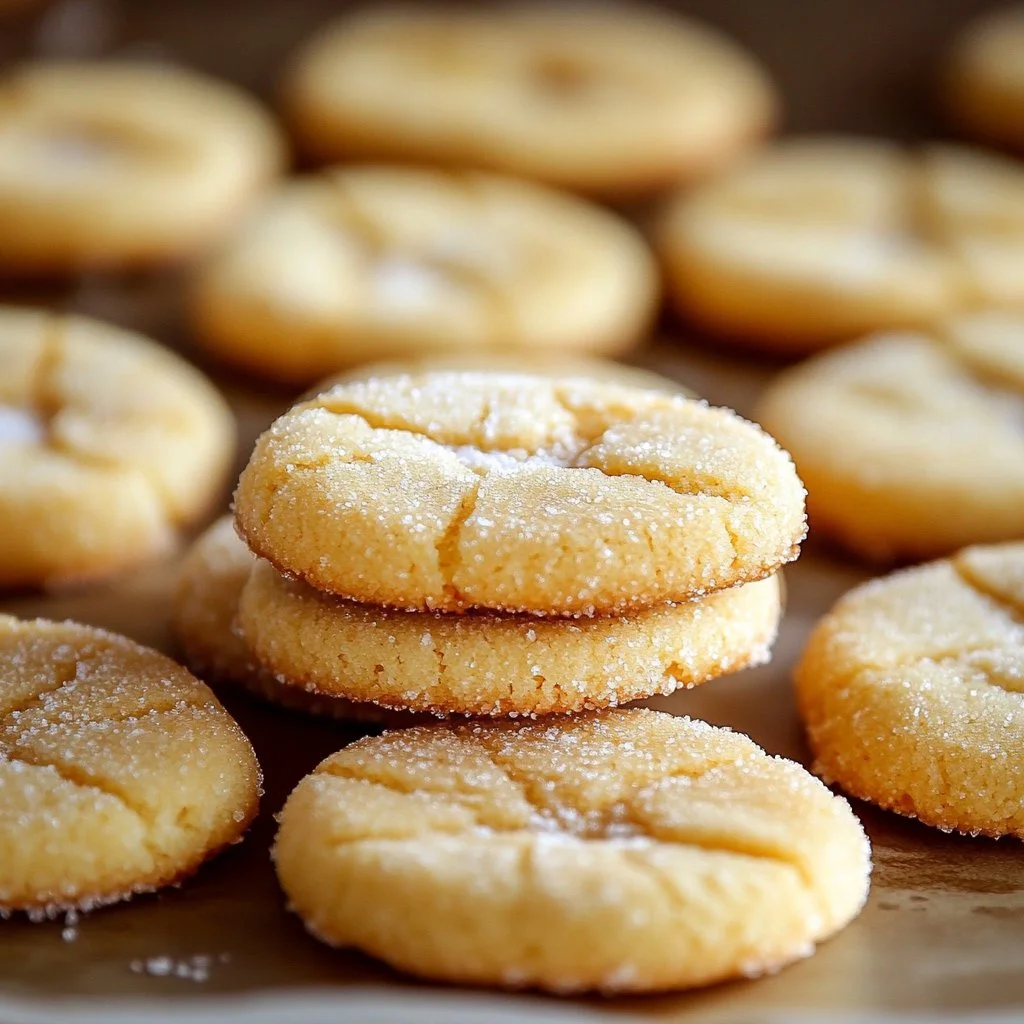
Kentucky Butter Cake Cookies
Ingredients
Method
- Preheat the oven to 350°F (175°C). Line baking sheets with parchment paper.
- In a large bowl, cream 1 cup softened butter with 1 cup granulated sugar and ½ cup powdered sugar until light and fluffy, about 2 to 3 minutes.
- Beat in the eggs one at a time, scraping the bowl between additions. Stir in 1 tsp vanilla and 1 tsp butter extract if using.
- In a separate bowl, whisk together 2.5 cups flour, 1 tsp baking powder, and ¼ tsp salt.
- Fold the dry ingredients into the wet just until combined. Avoid overmixing to keep the cookies tender.
- Scoop uniform balls of dough (about 1.5 tablespoons each) and place them on the prepared sheets, spacing them about 2 inches apart.
- Flatten each ball slightly with your palm or the bottom of a glass.
- Bake for 10 to 12 minutes, or until the edges are lightly golden but centers still look soft.
- While the cookies bake, make the glaze by melting ½ cup butter in a small saucepan. Add ¾ cup granulated sugar and ¼ cup water; stir over low heat until sugar dissolves and mixture is smooth.
- Remove from heat and stir in 1 tsp vanilla extract.
- When the cookies come out of the oven, brush the warm glaze over the top of each cookie so it soaks in.
- Let cookies cool on the sheet until set, then transfer to a cooling rack to finish cooling completely.