
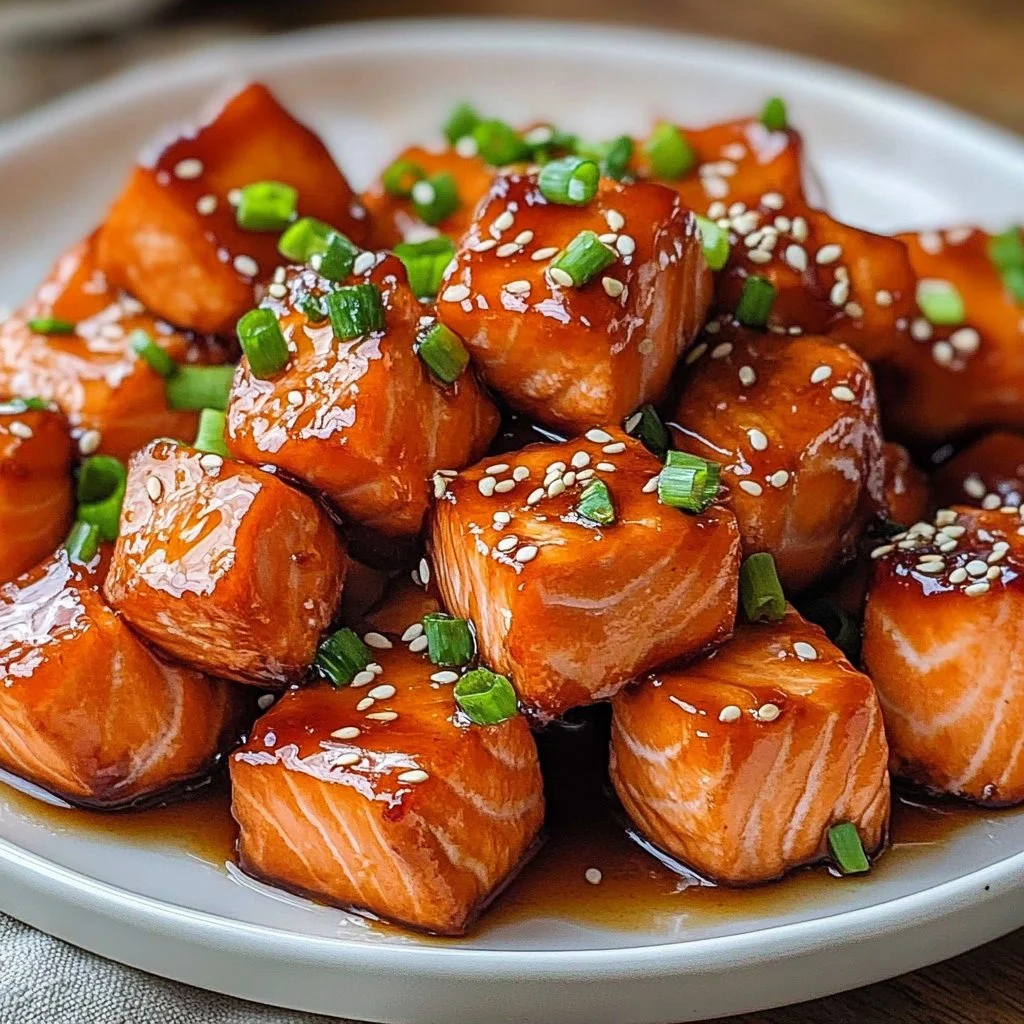
I make this honey garlic salmon bite recipe when I want dinner fast, sticky, and a little bit fancy without fuss. Bite-sized cubes of salmon get a light cornstarch coating, a quick pan-sear, then a glossy honey-garlic glaze that clings to every piece. It’s a weeknight hero: fast to cook, impressive on the plate, and forgiving if your timing isn’t perfect.
Why you’ll love this dish
This recipe delivers big flavor in very little time. The honey and garlic create a caramelized, slightly sweet coating while rice vinegar and soy sauce balance the richness. Cubing the salmon makes it cook evenly and keeps portions kid-friendly. It’s great for busy nights, casual dinner parties, or when you want something that feels special but takes under 20 minutes active time.
If you enjoy quick, saucy weeknight mains, you might also like this Creamy Chicken Garlic Parmesan Pasta for another fast, comforting option.
“Perfectly sticky, bold garlic flavor, and the salmon stays tender. A new staple for our family weeknights.”
Step-by-step overview
You’ll prep and cube the salmon, whisk together a simple honey-garlic glaze, sear the bites quickly in a hot skillet, then finish by simmering the glaze until thick and glossy and tossing the salmon back in. The whole process emphasizes high heat for a crisp exterior and a short finish so the fish stays tender.
What you’ll need
- 1.5 lbs fresh salmon fillet
- 1 tbsp olive oil or avocado oil
- 1/2 tsp sea salt
- 1/4 tsp black pepper
- 1 tbsp cornstarch (for salmon coating)
- 1/2 cup honey
- 4 cloves garlic, minced
- 1/4 cup low-sodium soy sauce (or tamari for a gluten-free option)
- 1 tbsp rice vinegar
- 1 tsp fresh ginger, grated
- 1/2 tsp toasted sesame oil
- 1 tbsp cornstarch (for glaze slurry)
- 2 tbsp cold water (for glaze slurry)
- 1/2 tsp red pepper flakes or Sriracha (optional for heat)
- 2 tbsp fresh green onions, sliced (for garnish)
- 1 tbsp toasted sesame seeds (for garnish)
Notes and swaps
- Use tamari to keep the recipe gluten-free.
- Avocado oil tolerates higher heat and gives a neutral flavor.
- If your honey is very runny, reduce to 1/3 cup for a less sweet glaze.
Step-by-step instructions
- Pat the salmon dry with paper towels. Cut into uniform 1-inch cubes.
- Season the cubes with sea salt and black pepper. Toss them with 1 tablespoon cornstarch to coat evenly. Shake off any excess.
- In a small bowl, whisk honey, minced garlic, soy sauce, rice vinegar, grated ginger, and toasted sesame oil. Set aside.
- Mix 1 tablespoon cornstarch with 2 tablespoons cold water to form a smooth slurry. Keep nearby.
- Heat 1 tablespoon oil in a large skillet over medium-high heat until shimmering. Add salmon bites in a single layer. Do not overcrowd; cook in batches if needed.
- Sear the salmon 2 to 3 minutes per side until golden brown. Flip carefully so the cubes keep their shape. Transfer seared bites to a plate.
- Reduce heat to medium-low. Pour the honey-garlic mixture into the same skillet. Bring it to a gentle simmer and stir for about 30 seconds.
- Whisk the cornstarch slurry again, then add it to the simmering glaze. Stir constantly until the glaze thickens and becomes glossy, about 1 minute. Add red pepper flakes or Sriracha now if you want heat.
- Return the salmon bites to the skillet. Toss gently to coat in the glaze and warm through for 30 to 60 seconds. Remove from heat.
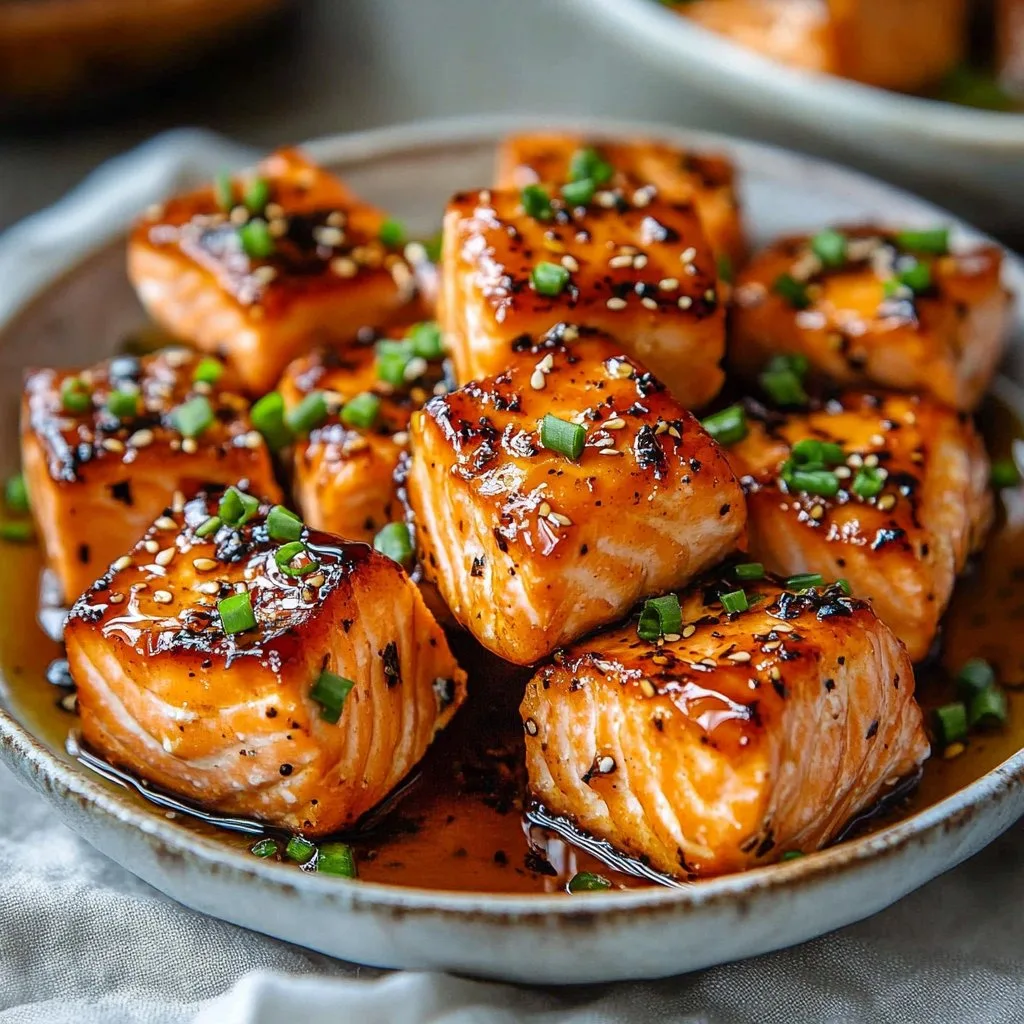
- Transfer to a serving platter. Garnish with sliced green onions and toasted sesame seeds. Serve immediately.
Best ways to enjoy it
These salmon bites shine over steamed jasmine rice or sticky rice to soak up the glaze. Try serving them with quick sides like stir-fried bok choy, a crisp cucumber salad, or roasted broccoli. For a more casual meal, pile the glazed bites into warmed tortillas or over a bed of mixed greens for a warm salmon salad.
If you like bold stir-fry flavors, this dish pairs well in a weeknight rotation with the crunchy textures of Crispy Garlic Chicken Noodles as an alternative main or side.
Storage and reheating tips
- Refrigerate leftovers in an airtight container within two hours of cooking. Eat within 2 days for best texture.
- To reheat, warm gently in a skillet over low heat with a splash of water or soy sauce. Heat just until warmed through to avoid overcooking.
- Freezing is not ideal for texture because cooked salmon becomes mealy. If you must freeze, wrap tightly and use within 1 month. Thaw in the fridge and reheat gently.
- Follow safe handling: cook salmon to an internal temperature of 145°F (63°C) at the thickest part, but for bite-sized pieces seared briefly, look for an opaque exterior and slightly translucent center depending on preference.
Pro chef tips
- Cut the salmon into uniform cubes so they cook evenly.
- Pat fish very dry before cornstarch—moisture prevents crisping.
- Use a hot pan and do not move the bites too soon; a good sear forms a caramelized surface that keeps the glaze from becoming soggy.
- Make the glaze while the fish cooks so everything finishes quickly.
- If your glaze thickens too much, thin with a teaspoon or two of hot water until it reaches the desired consistency.
Creative twists
- Citrus kick Add 1 teaspoon orange or lime zest to the glaze for bright citrus notes.
- Maple swap Replace half the honey with maple syrup for a deeper, woodsy sweetness.
- Sesame-crusted Press sesame seeds into the cornstarch-coated salmon before searing for extra texture.
- Low-sugar option Use a sugar-free honey substitute and reduce the soy sauce; add more ginger to boost flavor.
Common questions
How long does this recipe take from start to finish?
Active time is about 15 to 20 minutes. Including prep and a short cleanup, plan on 25 to 30 minutes total.
Can I use frozen salmon for this recipe?
Yes. Thaw completely in the refrigerator overnight, then pat very dry before cutting and coating. Excess moisture prevents a good sear.
Can I make the glaze ahead of time?
Yes. Make the glaze up to 48 hours ahead and store it refrigerated. Reheat gently before adding the cornstarch slurry and salmon. Mix the slurry only when you’re ready to thicken.
Is this recipe gluten-free?
It can be. Use tamari instead of soy sauce and verify your cornstarch is gluten-free. Tamari keeps the same salty depth without gluten.
Why coat the salmon in cornstarch?
A light cornstarch coating helps the salmon develop a crisp, caramelized exterior and gives the glaze something to cling to. It also slightly insulates the fish so it stays tender inside.

Honey Garlic Salmon Bites
Ingredients
Method
- Pat the salmon dry with paper towels and cut into uniform 1-inch cubes.
- Season the cubes with sea salt and black pepper. Toss them with 1 tablespoon of cornstarch to coat evenly. Shake off any excess.
- In a small bowl, whisk together the honey, minced garlic, soy sauce, rice vinegar, grated ginger, and toasted sesame oil. Set aside.
- Mix 1 tablespoon of cornstarch with 2 tablespoons of cold water to form a smooth slurry.
- Heat 1 tablespoon of oil in a large skillet over medium-high heat until shimmering.
- Add the salmon bites in a single layer. Sear for 2 to 3 minutes per side until golden brown. Do not overcrowd; cook in batches if needed.
- Transfer the seared salmon bites to a plate.
- Reduce heat to medium-low and pour the honey-garlic mixture into the same skillet. Bring to a gentle simmer and stir for about 30 seconds.
- Add the cornstarch slurry to the simmering glaze and stir constantly until the glaze thickens and becomes glossy, about 1 minute.
- Return the salmon bites to the skillet and gently toss to coat in the glaze. Warm through for 30 to 60 seconds, then remove from heat.
- Transfer the salmon bites to a serving platter and garnish with sliced green onions and toasted sesame seeds. Serve immediately.