
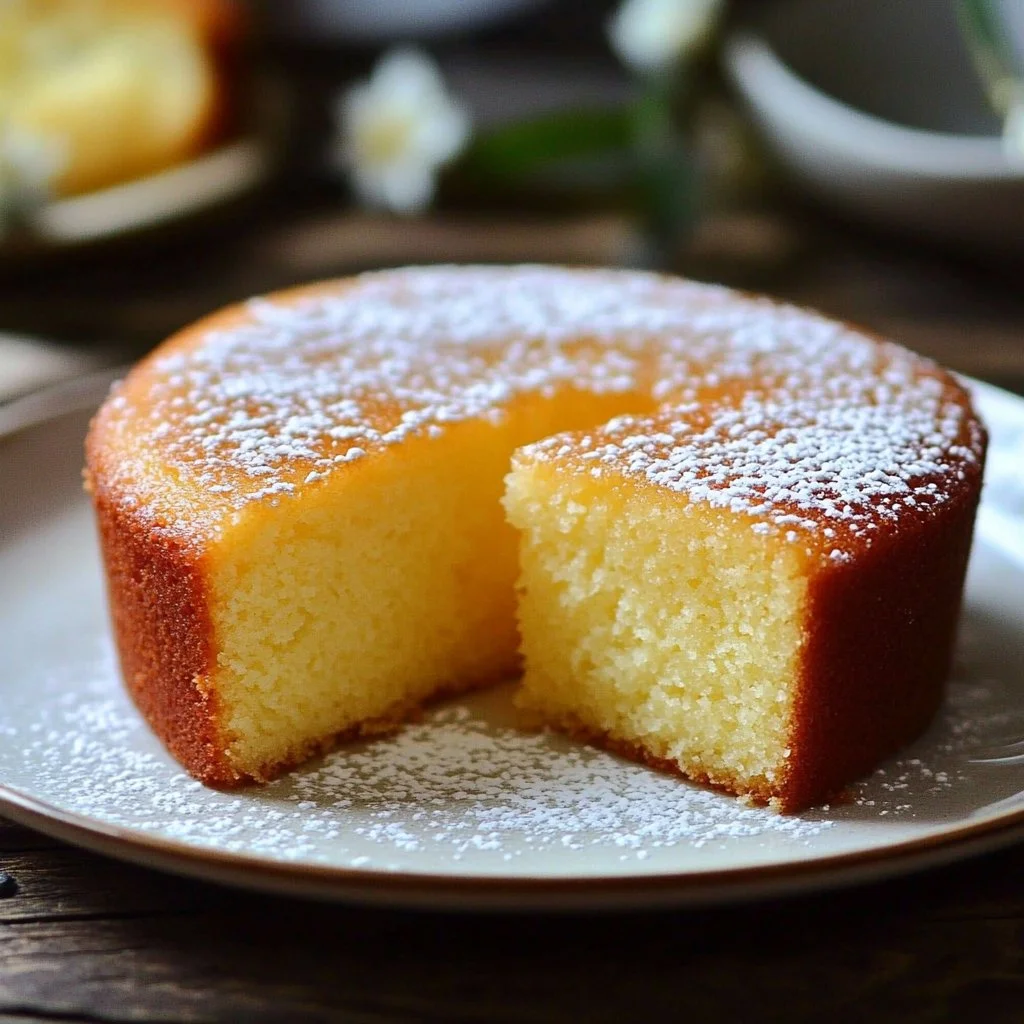
The first time I baked this French butter cake I was struck by how a handful of pantry staples—butter, sugar, eggs, flour—could make something so tender and reliably comforting. It’s a simple, old-school cake: dense but soft, buttery without being too sweet, and perfect whenever you want a no-fuss dessert that still feels a little special. If you’re looking for an everyday crowd-pleaser that’s easy to scale and dress up, this is it. For a deeper dive into the same cake with serving ideas and background, check out this ultimate everyday treat write-up.
What makes this recipe special
This French butter cake hits a sweet spot: it’s elegant enough for company but straightforward enough for weeknights. The technique—creaming butter and sugar, adding eggs one at a time, and alternating dry ingredients with milk—creates a close crumb and tender texture without complicated steps or special equipment.
- Quick to mix and bake (no chilling or resting required).
- Minimal, inexpensive ingredients most home bakers already have.
- A tolerant batter: it forgives small measuring variances and still turns out well.
- Easily adapted—add citrus, spices, or a glaze to change the profile.
“Perfectly buttery, not too sweet—our go-to cake when friends drop by. Simple, dependable, and always disappears.” — Home baker review
Step-by-step overview
Before you start: this cake takes about 10 minutes to prep and 35–40 minutes to bake. The workflow is straightforward:
- Preheat oven and prepare a 9-inch round pan.
- Cream softened butter and sugar until pale and fluffy.
- Add eggs one at a time and stir in vanilla.
- Combine dry ingredients separately, then add to the butter mixture in three additions, alternating with milk.
- Bake until a toothpick comes out clean. Cool briefly in the pan, then finish cooling on a rack.
This quick overview helps you pace the steps and know when to check the oven.
What you’ll need
- 1 cup unsalted butter, softened (room temperature)
- 1 cup granulated sugar
- 4 large eggs, room temperature
- 2 teaspoons vanilla extract
- 2 cups all-purpose flour
- 1 teaspoon baking powder
- 1/2 teaspoon salt
- 1/2 cup milk
Notes and substitutions:
- Butter: Unsalted gives better control over salt. You can use salted butter but reduce additional salt to taste.
- Milk: Whole milk gives the richest crumb; 2% works fine. For dairy-free, try unsweetened almond or oat milk—texture will be slightly lighter.
- Eggs: Room-temperature eggs incorporate better for volume. If you forget to bring eggs to room temp, place them in warm (not hot) water for 5–10 minutes.
- Flour: For gluten-free, use a reliable 1:1 gluten-free baking flour blend and add a little xanthan gum if your blend doesn’t include it.
Step-by-step instructions
- Preheat the oven to 350°F (175°C). Grease a 9-inch round cake pan and line the bottom with parchment for an easy release.
- In a large bowl, beat the softened butter and sugar with an electric mixer on medium-high until pale and fluffy, about 3–5 minutes. This aeration matters for texture.
- Add the eggs one at a time, beating well after each addition so the mixture doesn’t break. Mix in the vanilla extract.
- In a separate bowl, whisk together the flour, baking powder, and salt to distribute the leavening evenly.
- Add the dry ingredients to the butter mixture in three portions, alternating with the milk: flour, milk, flour, milk, flour. Start and finish with the flour. Stir each addition until just combined—don’t overmix.
- Pour the batter into the prepared pan and smooth the top with a spatula.
- Bake for 35–40 minutes, or until the top is golden and a toothpick inserted into the center comes out clean or with a few moist crumbs. Rotate the pan halfway through baking if your oven runs hot.
- Cool the cake in the pan for 10 minutes, then turn it out onto a wire rack to cool completely before slicing. Serve plain or dusted with powdered sugar.
Best ways to enjoy it
This cake is wonderfully versatile. Serve slices warm with a dusting of powdered sugar for tea; offer it at brunch with fresh fruit; or let it finish a casual dinner.
Pairing ideas:
- A dollop of whipped cream and macerated berries for a summer dessert.
- Warmed with a scoop of vanilla ice cream for an indulgent finish.
- For mixed-cuisine dinner parties, it even works as a light dessert after a rich main—try it after something creamy and spiced like butter chicken to cleanse the palate.
Presentation tips:
- Dust with powdered sugar and add lemon zest for a bright look.
- Slice with a hot, clean knife for neat wedges.
- Serve on simple white plates so the golden crumb stands out.
Storage and reheating tips
- Room temperature: Keep the cooled cake covered at room temperature in an airtight container for up to 2–3 days. Avoid leaving cake exposed more than 2 hours in warm environments to maintain quality.
- Refrigerator: Store wrapped or in an airtight container for up to 5 days. Bring to room temperature before serving for best texture.
- Freezing: Wrap whole cake tightly in plastic wrap, then foil, and freeze for up to 3 months. Thaw overnight in the refrigerator, then come to room temperature before serving.
- Reheating: Warm individual slices for 10–15 seconds in the microwave or 5–7 minutes at 300°F in the oven to refresh the crumb; cover loosely to prevent drying.
Food safety: Because the cake is fully baked, it’s safe to eat when cooled. If you add perishable toppings (like whipped cream or custard), refrigerate leftovers promptly and consume within 48 hours.
Pro chef tips
- Cream well: Beat butter and sugar until pale to incorporate air—this gives lift without relying on many eggs or a complex technique.
- Eggs one at a time: Adding eggs slowly prevents the batter from breaking and keeps the structure even.
- Don’t overmix: Once you combine wet and dry, stop mixing as soon as no streaks of flour remain to keep the cake tender.
- Test doneness by feel: The cake should spring back lightly at the center; a toothpick with a few moist crumbs is better than one with wet batter.
- Pan prep: Parchment on the bottom makes it easy to remove the cake without damaging edges. Butter the sides well to encourage a nice rise and even browning.
- If you like a nuttier flavor, brown the butter, cool it, then use in the recipe—reduce temperature or baking time slightly as the batter will be a touch thinner.
Creative twists
- Lemon-vanilla: Add 1 tablespoon lemon zest and a simple lemon glaze (powdered sugar + lemon juice).
- Browned butter: Swap regular melted (cooled) browned butter for a toasty depth.
- Almond and cherry: Replace 1/2 teaspoon vanilla with 1/2 teaspoon almond extract and fold in 1/2 cup chopped, toasted almonds; serve with lightly macerated cherries.
- Chocolate swirl: Fold in 1/3 cup melted dark chocolate to half the batter and swirl before baking.
- Gluten-free: Use a 1:1 gluten-free flour blend and add 1/4 teaspoon xanthan gum if needed.
- Vegan-ish swap: Use plant-based butter and 4 flax “eggs” (4 tbsp ground flax + 12 tbsp water, chilled) — texture will be denser but still pleasant.
Helpful answers
How long does this cake take from start to finish?
Prep is about 10 minutes, bake time 35–40 minutes, plus at least 10 minutes cooling in the pan. Plan for roughly 1 hour total including cooling.
Can I halve the recipe or bake in a different pan?
Yes. Halve the recipe for a 6- or 8-inch pan (bake time will decrease—check at 25–30 minutes). For a 9×13 pan, double the recipe. Always watch for doneness since pan shape affects baking time.
Can I make the batter ahead of time?
You can mix the batter and refrigerate it for up to 24 hours. Let it sit at room temperature 30 minutes before baking and give a light stir. Note that some rise may be affected; baking straight away yields the best lift.
Is this cake safe to serve to children and elderly?
Yes—the cake is fully baked, so there’s no raw egg concern. If serving to people with dietary restrictions (egg, dairy, gluten), use the suggested substitutions and label accordingly.
How do I know when it’s done without a toothpick?
A lightly pressed center should spring back. If it leaves a gentle indentation that fills in, it’s done. Overbaked cake will feel dry and firm.
If you want, I can create a printable recipe card or scaled versions (halved or doubled) for you—just tell me the serving size you need.

French Butter Cake
Ingredients
Method
- Preheat the oven to 350°F (175°C). Grease a 9-inch round cake pan and line the bottom with parchment.
- In a large bowl, beat the softened butter and sugar with an electric mixer on medium-high for about 3–5 minutes until pale and fluffy.
- Add the eggs one at a time, beating well after each addition. Mix in the vanilla extract.
- In a separate bowl, whisk together the flour, baking powder, and salt.
- Add the dry ingredients to the butter mixture in three portions, alternating with the milk: flour, milk, flour, milk, flour. Stir each addition until just combined.
- Pour the batter into the prepared pan and smooth the top with a spatula.
- Bake for 35–40 minutes, until the top is golden and a toothpick inserted into the center comes out clean.
- Cool the cake in the pan for 10 minutes, then turn it out onto a wire rack to cool completely before slicing.