
I make this crispy salmon and rice bowl whenever I want a fast, feel-good dinner that still looks like I tried. It’s a simple bowl of pan-seared, skin-on salmon over warm jasmine or brown rice, topped with avocado, crisp cucumber, shredded carrot, edamame, and a quick sweet-savory sesame sauce. The contrast of crunchy skin, tender fish, and creamy avocado makes it weeknight-worthy and restaurant-worthy at the same time. If you’re into fuss-free bowls, you might also enjoy these easy chicken and rice recipes for more weeknight inspo.
Why you’ll love this dish
This bowl hits a lot of home-run items: it’s quick, balanced (protein, veg, carbs, healthy fat), and forgiving — the salmon is hard to mess up if you follow a couple of key steps. It’s great for busy nights, casual date nights, or when you want a bright, fill-you-up lunch. Swap jasmine for brown rice to make it heartier, or double the vegetables for an extra-vegetable bowl.
“Crispy skin, flaky salmon, and a honey-sesame drizzle — my go-to when I want comfort without the work.” — a regular dinner-table review
Preparing Crispy Salmon and Rice Bowl
Step-by-step overview
- Dry, season, and rest the salmon briefly so the seasoning sticks.
- Heat oil until shimmering and sear skin-side down to get the skin crisp.
- Flip, finish cooking, and let the fillets rest to preserve juiciness.
- Whisk a quick sauce and assemble warm bowls with rice and fresh toppings.
This recipe takes about 20–25 minutes total and yields two generous bowls.
What you’ll need
- 2 salmon fillets (skin-on) — about 6–7 oz each
- 1 tablespoon olive oil
- Salt and pepper to taste
- 1 teaspoon garlic powder
- 1 teaspoon smoked paprika
- 2 cups cooked jasmine rice or brown rice (use brown for more fiber)
- 1/2 avocado, sliced
- 1/4 cup cucumber, sliced
- 1/4 cup shredded carrots
- 1/4 cup edamame, steamed
- 1 tablespoon sesame seeds for garnish
Sauce - 2 tablespoons low‑sodium soy sauce
- 1 tablespoon sesame oil
- 1 teaspoon honey
- 1 teaspoon rice vinegar
- 1/2 teaspoon sriracha (optional, for heat)
Notes and substitutions
- If you need gluten-free, swap soy sauce for tamari.
- Swap sesame oil for a neutral oil in the sauce if you don’t love sesame flavor.
- Use leftover rice chilled or freshly made; slightly day-old rice holds up better under toppings.
How to prepare it
Step-by-step instructions
- Pat the salmon very dry with paper towels. Season both sides with salt, pepper, garlic powder, and smoked paprika. Let sit for 5 minutes so the flavors adhere.
- Heat the olive oil in a non-stick skillet over medium-high heat until it shimmers.
- Place the salmon skin-side down in the pan. Press gently with a spatula for 20 seconds to flatten the skin.
- Cook undisturbed for 4 to 5 minutes, until the skin is deeply browned and crisp.
- Flip the fillets and cook for another 3 to 4 minutes, until the salmon flakes easily and reaches about 145°F (63°C) in the thickest part. Remove from the pan and let rest a few minutes.
- While the salmon rests, whisk together soy sauce, sesame oil, honey, rice vinegar, and sriracha in a small bowl. Taste and adjust balance—more honey for sweetness, more vinegar for brightness.
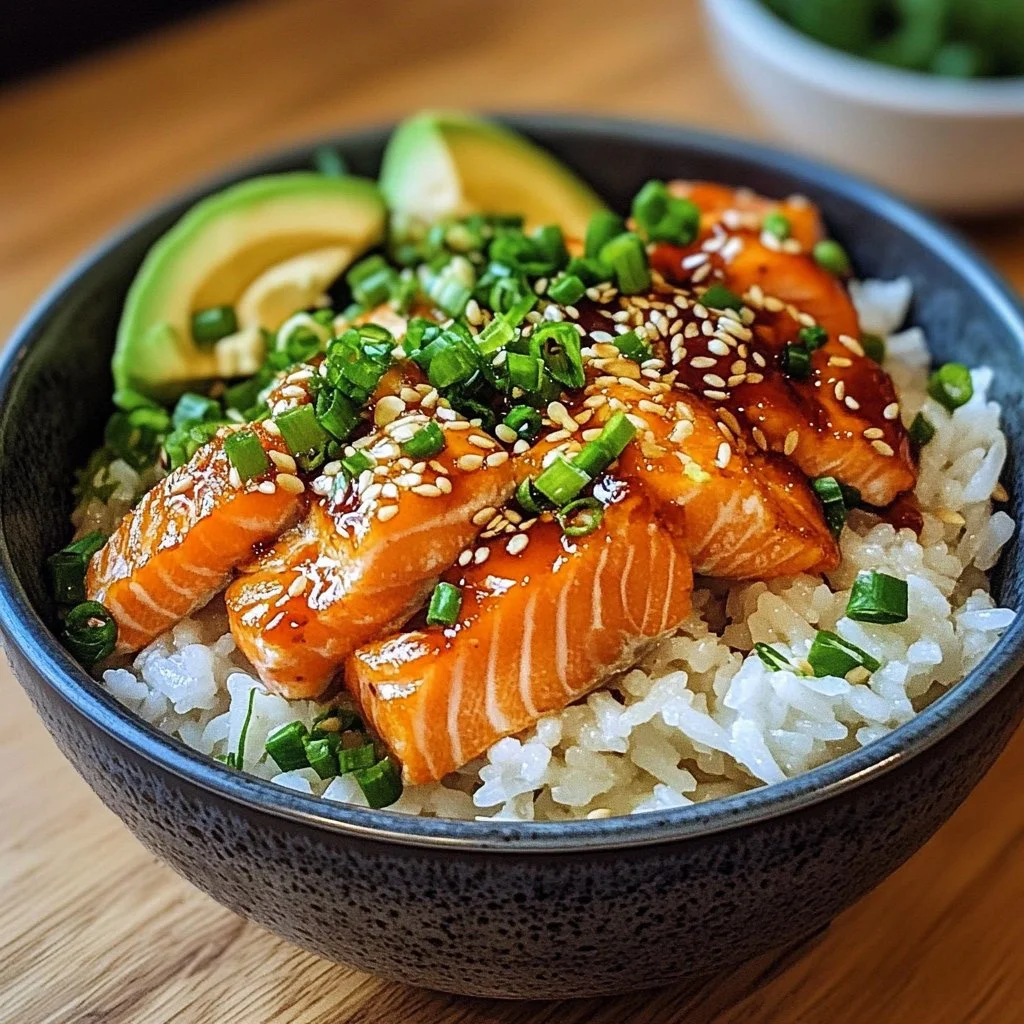
- Divide warm rice between two bowls. Top with a salmon fillet, sliced avocado, cucumber, shredded carrots, and edamame. Drizzle the sauce evenly and finish with sesame seeds.
How to plate and pair
Best ways to enjoy it
- Arrange slices of avocado on one side and the salmon on the other to show off the crisp skin. Scatter edamame and carrots for color and texture.
- Pair with a light, citrusy salad or miso soup to round out the meal. For a heartier side, a warm, savory casserole also works well — try a comforting French onion ground beef and rice casserole as a weekend companion.
- Serve with extra sriracha or low-sodium soy on the side for guests who like more heat or salt.
Storage and reheating tips
Keeping leftovers fresh
- Refrigerate: Store salmon and rice in airtight containers and eat within 3 days. Cool cooked food to room temperature and refrigerate within 2 hours to stay food-safe.
- Freeze: Assemble-only rice and sauce can be frozen for up to 2 months, but cooked salmon is best fresh. If freezing salmon, wrap tightly and consume within 1 month for best texture.
- Reheat: To revive crispness, warm the salmon skin-side down in a non-stick skillet over medium-low heat for a few minutes. Reheat rice in the microwave with a splash of water and a damp paper towel cover, or steam briefly. Avoid overheating to prevent drying out the fish.
Pro chef tips
Helpful cooking tips
- Dry the skin thoroughly. Moisture is the enemy of crispness.
- Use a heavy skillet and let it get hot before adding the fish to create an immediate sear.
- Press the fillet into the pan for the first 20 seconds to avoid curling and ensure even contact.
- Let the salmon rest for a few minutes after cooking to redistribute juices.
- Taste the sauce and balance all three elements—salt, sweet, acid—before drizzling. A tiny squeeze of fresh lime brightens it instantly.
Recipe variations
Creative twists
- Citrus-ginger: Add grated ginger and a splash of orange juice to the sauce for a fresher finish.
- Miso-glazed: Whisk 1 teaspoon white miso into the sauce for umami depth and brush on the salmon before the last minute of cooking.
- Poke-style: Cube the salmon (use sushi-grade and skip searing) and toss with the sauce for a poke-inspired bowl.
- Veg-forward: Swap rice for cauliflower rice and double the vegetables for a lower-carb version.
- Spicy-sesame: Increase sriracha to 1 teaspoon and add a pinch of red pepper flakes for more heat.
Common questions
How long does this take from start to finish?
About 20–25 minutes when rice is already cooked. If you need to cook rice, add roughly 15–20 minutes for jasmine and 40–45 minutes for brown rice (or use a rice cooker).
Do I have to use skin-on salmon?
Skin-on is recommended because it crisps up and protects the flesh while searing, locking in moisture. If you prefer skinless, reduce the sear time and watch carefully to avoid overcooking.
What is the safe internal temperature for salmon?
The USDA recommends cooking fish to an internal temperature of 145°F (63°C). Many cooks pull salmon slightly earlier (around 125–130°F / 52–54°C) for a moister center, then let it rest; use your judgment and preferences.
Can I meal-prep these bowls for lunches?
Yes. Store components separately: rice and veggies in one container, salmon in another. Assemble and add avocado and sauce right before eating for best texture. Consume refrigerated meals within 3 days.
How do I make this gluten-free?
Replace soy sauce with tamari or a gluten-free soy sauce alternative. Double-check any packaged ingredients like sriracha for hidden gluten.
If you want further recipe ideas or a printable shopping list, tell me what pantry staples you have and I’ll adapt the bowl to what’s on hand.
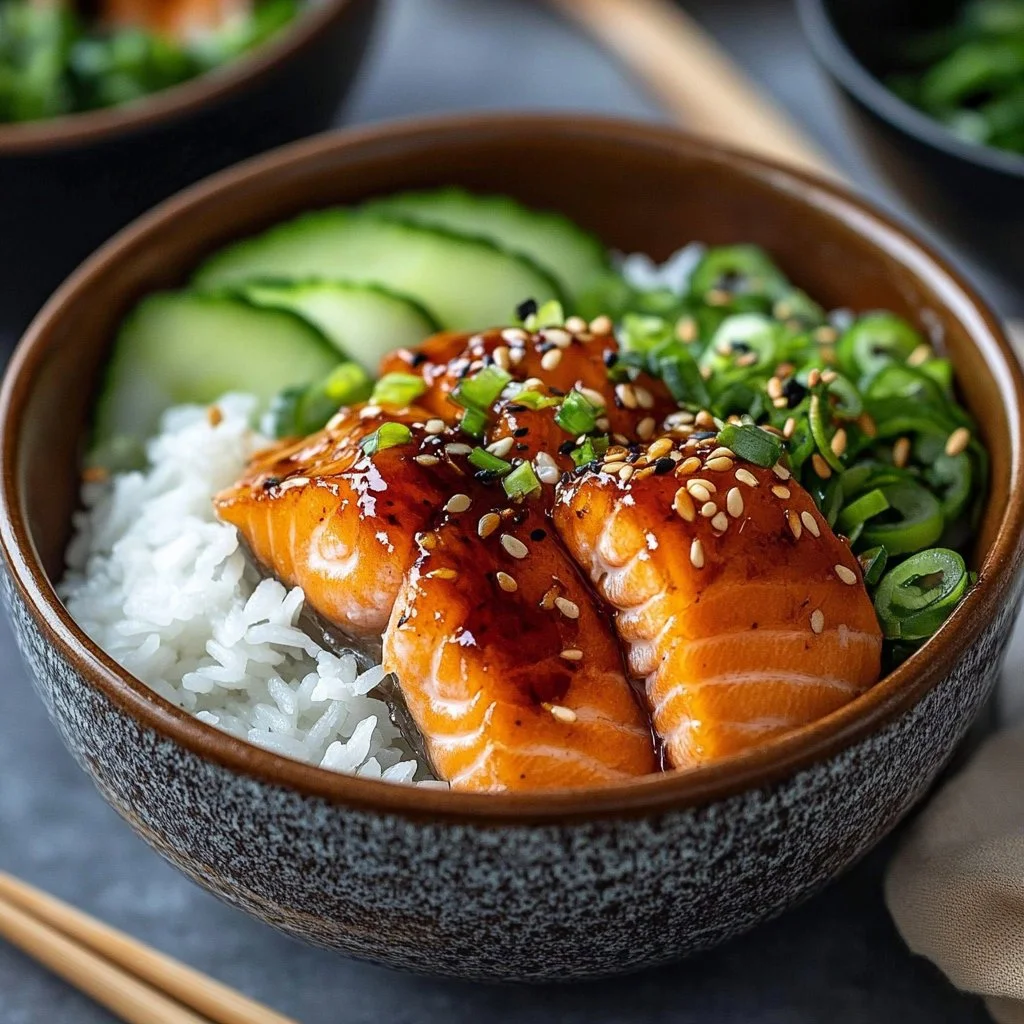
Crispy Salmon and Rice Bowl
Ingredients
Method
- Pat the salmon very dry with paper towels. Season both sides with salt, pepper, garlic powder, and smoked paprika. Let sit for 5 minutes.
- Heat the olive oil in a non-stick skillet over medium-high heat until it shimmers.
- Place the salmon skin-side down in the pan. Press gently with a spatula for 20 seconds.
- Cook for 4 to 5 minutes, until the skin is deeply browned and crisp.
- Flip the fillets and cook for another 3 to 4 minutes, until the salmon flakes easily and reaches 145°F (63°C). Remove from the pan and let rest.
- While the salmon rests, whisk together soy sauce, sesame oil, honey, rice vinegar, and sriracha in a small bowl. Adjust to taste.
- Divide warm rice between two bowls. Top with a salmon fillet, sliced avocado, cucumber, shredded carrots, and edamame.
- Drizzle the sauce evenly and finish with sesame seeds.