
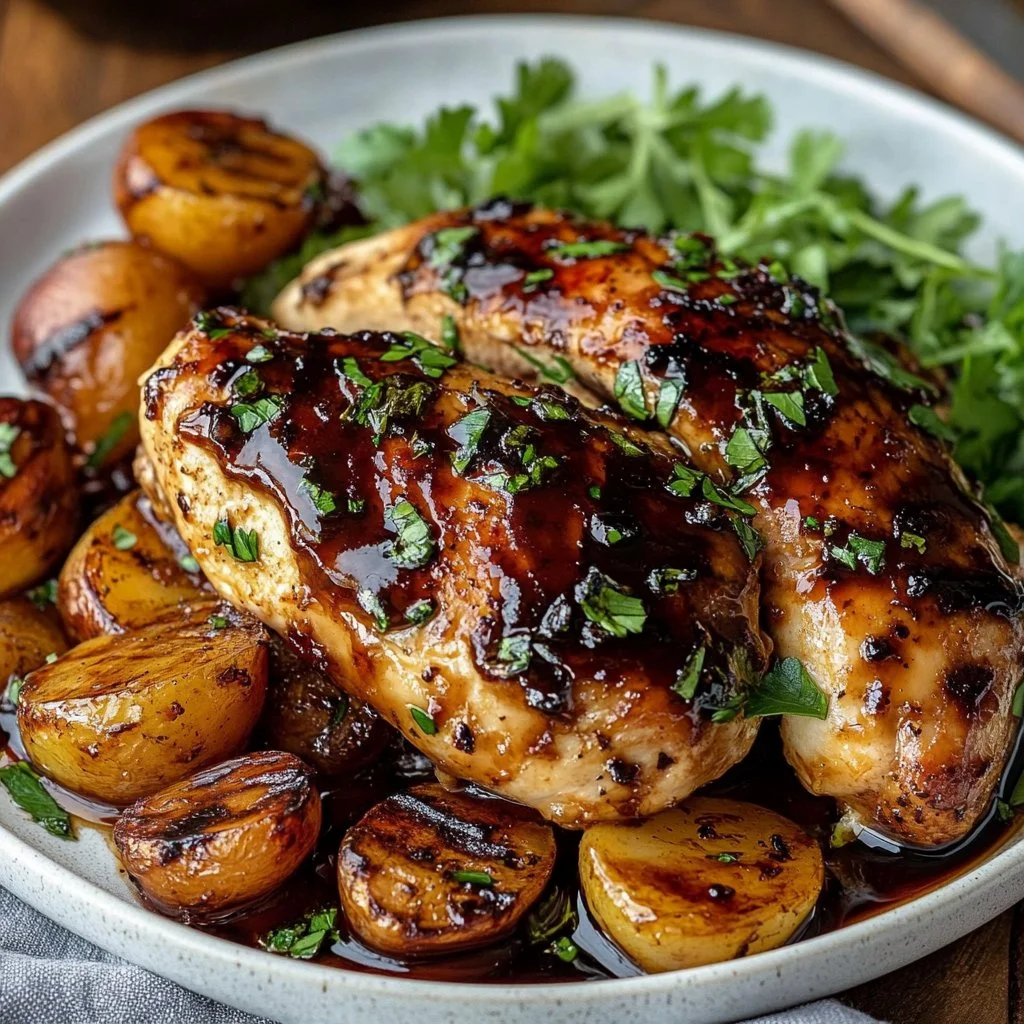
If you have a busy weeknight or want a simple dish that still feels thoughtful, this balsamic baked chicken breast fits the bill. The marinade of balsamic, olive oil, honey, garlic, oregano, and thyme softens and flavors lean chicken without complicated steps, and it works whether you are feeding two or four. If you enjoy mild roasted chicken with a slightly sweet glaze, you might also like this garlic butter baked chicken for a different finishing flavor.
Why cook this at home
Balsamic baked chicken is a fast, low-effort way to turn plain chicken breasts into a saucy, aromatic main. The acid in the balsamic lightly tenderizes the surface, while honey balances the vinegar so the exterior caramelizes in the oven. Marinating ahead lets you prep in the morning and bake at dinner time, which makes this a practical choice for weeknights. The recipe uses pantry staples and scales easily, and it keeps the meat moist if you monitor temperature rather than relying on fixed bake times. This is a good recipe when you want a reliable protein to pair with salads, grains, or roasted vegetables.
Preparing Balsamic Baked Chicken Breast
- Whisk together balsamic, olive oil, honey, garlic, oregano, and thyme to make a marinade.
- Coat chicken and chill to let flavors penetrate.
- Bring chicken briefly to room temperature before baking.
- Arrange chicken in a greased baking dish and pour remaining marinade over top.
- Bake at 400°F until the internal temperature reaches 165°F.
Gather these items
4 boneless, skinless chicken breasts
1/2 cup balsamic vinegar
1/4 cup olive oil
2 tablespoons honey (maple syrup can be used instead)
3 cloves garlic, minced
1 teaspoon dried oregano
1 teaspoon dried thyme
Salt and pepper, to taste
Fresh basil leaves for garnish, optional
Notes: If you prefer a vegan version, swap the chicken for extra-firm tofu and use maple syrup for the sweetener. For a lower-sodium option, reduce added salt and rely more on the herbs and garlic for flavor.
Cooking method
- In a medium mixing bowl, combine balsamic vinegar, olive oil, honey, minced garlic, dried oregano, and dried thyme. Whisk until well blended and the honey has dissolved. Season with salt and pepper to taste.
- Place the chicken breasts in a large resealable plastic bag or shallow dish. Pour the marinade over the chicken, ensuring each piece is well coated. Seal the bag tightly or cover the dish with plastic wrap and refrigerate for at least 30 minutes, preferably 2 to 4 hours.
- Preheat the oven to 400°F (200°C). Remove the chicken from the refrigerator and let it sit at room temperature for 10 to 15 minutes.
- Line a baking dish with aluminum foil or parchment paper and lightly grease it with olive oil. Place the marinated chicken breasts in the prepared baking dish, spaced evenly, and pour any remaining marinade over the chicken.
- Bake for 25 to 30 minutes, or until the internal temperature reaches 165°F (75°C). Optionally, baste the chicken with pan juices halfway through baking.
What to serve it with
Serve sliced chicken over a bed of baby spinach or mixed greens for a quick dinner salad. Pair with a simple grain like quinoa, farro, or rice to catch the glaze from the chicken. Roasted root vegetables or steamed green beans add contrasting texture and color. For a lighter plate, tuck the chicken into warm pita or flatbread with a spoonful of Greek-style yogurt seasoned with lemon and garlic.
Keeping leftovers fresh
Cooked chicken breasts will keep well in the refrigerator for 3 to 4 days when stored in an airtight container. For longer storage, freeze portions flat in freezer bags for up to 2 to 3 months; thaw overnight in the refrigerator before reheating. Reheat leftovers until the internal temperature reaches 165°F to ensure safety. Do not leave cooked chicken at room temperature for more than two hours total, including the time on the countertop while serving.
Tricks for success
- Pound thicker breasts to an even thickness so they cook uniformly and hit 165°F at the same time.
- Use an instant-read thermometer to avoid overcooking; remove the pan from the oven once the thermometer reads 165°F.
- If you prefer more caramelization, finish under the broiler for 1 to 2 minutes while watching closely.
- Let the chicken sit at room temperature briefly before baking so it cooks more evenly.
- For a glaze with more body, simmer the leftover marinade in a small saucepan for a few minutes to reduce and thicken, then spoon over the baked chicken. For a richer butter-flavored finish try the technique in this garlic butter baked chicken recipe as inspiration.
Creative twists
- Swap dried oregano and thyme for a teaspoon of Italian seasoning and a pinch of red pepper flakes for warmth.
- Add sliced shallot and halved cherry tomatoes around the chicken to roast alongside and create a simple pan sauce.
- Use maple syrup instead of honey for a deeper, woodsy sweetness and to keep the recipe vegan-friendly when paired with tofu.
- For a Mediterranean spin, finish with chopped kalamata olives and a scatter of crumbled feta after baking, if you want more contrast.
- Try marinating with a tablespoon of Dijon mustard mixed into the marinade for extra tang and a subtle emulsified glaze.
Helpful answers
How long should I marinate the chicken for best flavor?
Marinate for at least 30 minutes to allow surface flavor to develop, and 2 to 4 hours for a more pronounced taste. Avoid marinating much longer than 8 hours because the acid in the balsamic can begin to change the chicken’s texture.
Can I use bone-in chicken instead of boneless breasts?
Yes, but adjust cooking time. Bone-in pieces will take longer to reach 165°F, often 10 to 20 minutes more depending on size. Always check the thickest part near the bone with an instant-read thermometer.
Is it safe to bake at 400°F, and how do I know when it is done?
Baking at 400°F gives a good balance between browning and retaining juices. The chicken is done when an instant-read thermometer inserted into the thickest part reaches 165°F.
What can I substitute for honey if I avoid sweeteners?
Maple syrup is the closest direct swap and keeps the glaze cohesive. If you prefer to skip sweeteners entirely, the chicken will be less glossy and slightly tangier; you can balance that with a pinch more olive oil and a little extra garlic.
Can I prepare this ahead and freeze before baking?
Yes, place marinated breasts in a freezer-safe bag and freeze flat. Thaw in the refrigerator overnight before bringing to room temperature and baking. Frozen, marinated chicken maintains good texture for up to one month.
Give this balsamic baked chicken a try when you want straightforward prep with a reliable result. Tweak the herbs and sweetener to match your pantry, and let the thermometer do the timing to keep the meat juicy. Share a photo of your finished plate or any variations you tried so others can see what worked for you.
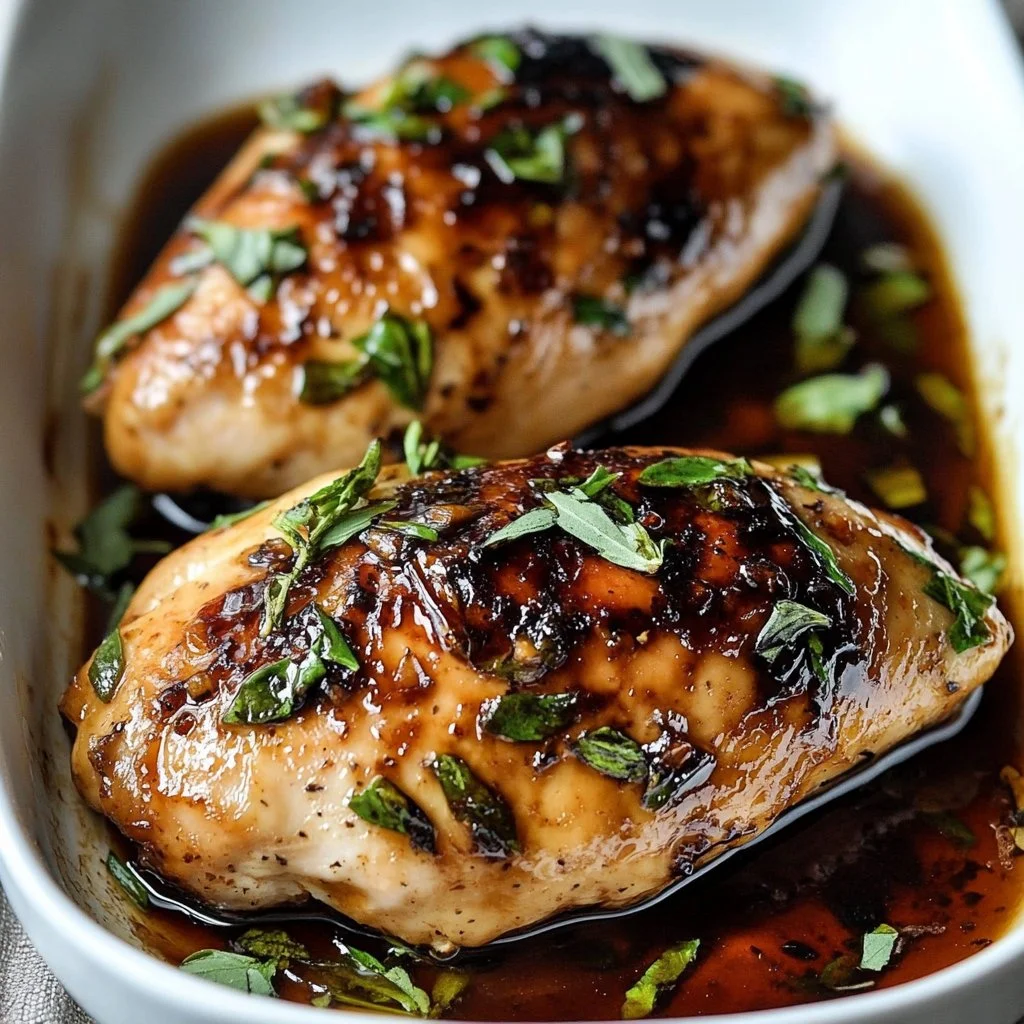
Balsamic Baked Chicken Breast
Ingredients
Method
- In a medium mixing bowl, combine balsamic vinegar, olive oil, honey, minced garlic, dried oregano, and dried thyme. Whisk until well blended and the honey has dissolved. Season with salt and pepper to taste.
- Place the chicken breasts in a large resealable plastic bag or shallow dish. Pour the marinade over the chicken, ensuring each piece is well coated. Seal the bag tightly or cover the dish with plastic wrap and refrigerate for at least 30 minutes, preferably 2 to 4 hours.
- Remove the chicken from the refrigerator and let it sit at room temperature for 10 to 15 minutes.
- Preheat the oven to 400°F (200°C).
- Line a baking dish with aluminum foil or parchment paper and lightly grease it with olive oil. Place the marinated chicken breasts in the prepared baking dish, spaced evenly, and pour any remaining marinade over the chicken.
- Bake for 25 to 30 minutes, or until the internal temperature reaches 165°F (75°C). Optionally, baste the chicken with pan juices halfway through baking.