
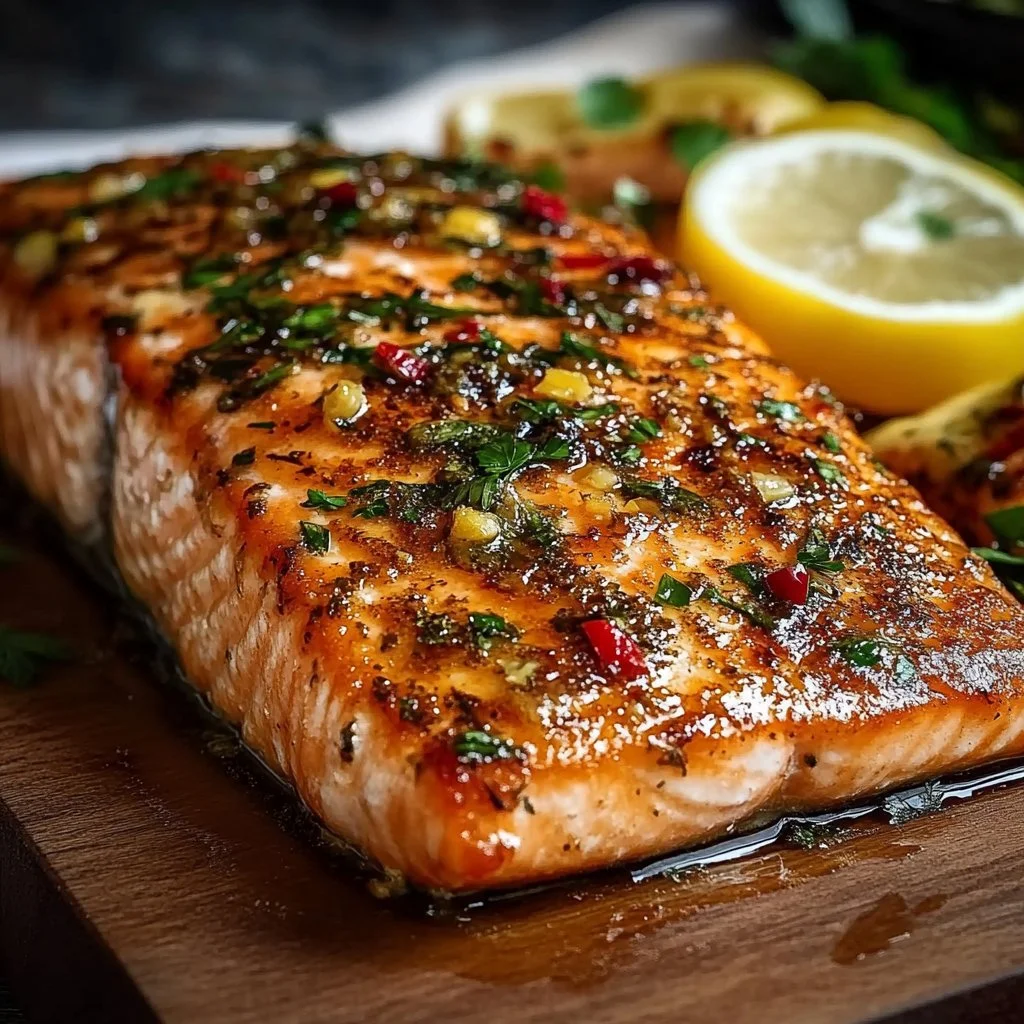
I still remember the first time I brushed a salmon fillet with a buttery, garlicky glaze and slid it into a hot oven — the kitchen filled with a sweet-savory scent that felt both comforting and a little fancy. This Texas Roadhouse-style baked salmon is that feeling made into a 20-minute weeknight dinner: simple ingredients, bold flavor, and a reliably flaky finish. If you enjoy fuss-free seafood that looks restaurant-worthy without the fuss, try pairing this with an easy side such as baked feta eggs for a brunch-ready spread.
Why you’ll love this dish
This recipe balances buttery richness, bright lemon, and a touch of sweetness from brown sugar so each bite is layered but not heavy. It’s fast, forgiving, and uses pantry staples. Salmon cooks quickly and holds up well to bold seasonings, which makes this a great choice when you want something impressive without a lot of hands-on time.
"Golden edges, garlicky butter, and just the right amount of lemon — this feels like a restaurant plate at home."
Perfect for busy weeknights, casual dinner guests, or when you want to stretch a budget-friendly fish into a meal that looks like effort went into it.
Step-by-step overview
You’ll mix a quick butter-and-lemon sauce, brush it on fillets, and bake until just flaky. Total active prep is about 10 minutes. The oven finishes the work, and a final brush of pan sauce gives a glossy, savory finish.
What you’ll need
- 4 salmon fillets (6–8 oz each), skin on or off
- 3 tbsp melted butter (use unsalted if you want control over salt)
- 2 tbsp olive oil
- 3 cloves garlic, minced (or 1 tsp garlic powder in a pinch)
- 2 tbsp lemon juice (fresh is best)
- 1 tsp paprika (sweet or smoked to taste)
- 1 tsp brown sugar (or maple syrup/honey as a swap)
- 1 tsp dried parsley (or 1 tbsp fresh chopped parsley)
- Salt and pepper to taste
- Lemon slices (optional, for topping)
Notes: If you prefer less sugar, reduce the brown sugar or omit it. For lower fat, cut the butter by half and increase the olive oil.
How to prepare it
- Preheat your oven to 400°F (200°C).
- In a medium bowl, whisk melted butter, olive oil, minced garlic, lemon juice, paprika, brown sugar, dried parsley, salt, and pepper until combined. Taste and adjust seasoning.
- Line a baking tray with foil for easier cleanup. Arrange salmon fillets skin-side down (if skin-on) with space between them.
- Generously brush each fillet with the butter mixture, coating the tops and sides. Reserve any extra for basting.
- Optional: place a thin lemon slice on each fillet for added zest and an attractive finish.
- Bake for 12 to 15 minutes, depending on thickness, until the salmon flakes easily with a fork and reaches your desired doneness.
- Remove from the oven and spoon any pan juices over the fillets before serving.
Best ways to enjoy it
Serve the salmon on a bed of buttery mashed potatoes, alongside roasted asparagus, or over a simple herbed rice pilaf. For a lighter plate, serve with a crisp green salad and a drizzle of extra lemon. If you want to create a surf-and-turf style meal without a lot of extra work, serve this salmon alongside garlic parmesan chicken skewers for a crowd-pleasing combo.
Ideas for plating: fan two fillets on a warmed plate, spoon pan sauce across the top, and tuck lemon wedges and chopped parsley around the edge.
Storage and reheating tips
Refrigerate leftovers within two hours of cooking in an airtight container. Store for up to 3 days. Reheat gently in a 275°F (135°C) oven for 10–12 minutes covered with foil to prevent drying, or warm in a skillet over low heat with a splash of water or broth. Cooked salmon freezes well for up to 2–3 months; wrap tightly in plastic wrap and place in a freezer bag. Thaw overnight in the refrigerator before reheating.
Food safety note: the USDA recommends fish be cooked to an internal temperature of 145°F (63°C). Many cooks prefer 125–130°F for a moister texture; if you choose the lower target, consume promptly and be aware of personal risk preferences.
Helpful cooking tips
- Use room-temperature salmon for even cooking. Take fillets out of the fridge 15–20 minutes before baking.
- Pat fillets dry to help the glaze stick and to reduce steaming in the oven.
- For a glossy finish, save some butter mixture to brush on immediately after baking.
- If your fillets are particularly thick, tent loosely with foil for the first 8–10 minutes, then remove foil to finish browning.
- If you like a little char, place under the broiler for 1–2 minutes at the end — watch carefully to prevent burning.
- Use a thermometer to check doneness: 125–130°F for medium, 145°F for well done and according to USDA safety guidance.
Creative twists
- Citrus-herb: add orange juice and chopped fresh dill for a brighter profile.
- Asian twist: swap lemon for lime, brown sugar for a touch of honey, and add a splash of low-sodium soy sauce and grated ginger.
- Blackened: replace paprika with a Cajun spice blend and skip the sugar for a smoky, spicy crust.
- Low-carb: omit brown sugar entirely and boost lemon and garlic for brightness.
- Crust option: press a mix of panko, parmesan substitute (omit if avoiding certain cheeses), and herbs on top before baking for crunch.
Common questions
How long should I bake thicker salmon fillets?
For fillets thicker than 1 inch, bake 15–18 minutes at 400°F (200°C). Check with a fork for flakiness or use an instant-read thermometer. Thicker pieces may need a few extra minutes; cover lightly with foil if they start browning too quickly.
Can I use frozen salmon for this recipe?
Yes. Thaw the salmon fully in the refrigerator overnight, pat dry, then follow the recipe. Cooking from frozen will increase bake time substantially and may yield uneven results.
Is this recipe healthy?
Salmon is rich in omega-3 fatty acids and protein. This recipe uses modest amounts of butter and oil; you can reduce butter or swap to all olive oil for a lighter version. Portion control and sides determine the overall meal balance.
Can I prepare the butter mixture ahead of time?
Yes, mix the butter sauce up to a day in advance and keep refrigerated. Bring it to room temperature or gently rewarm before brushing on the salmon so it spreads easily.
How do I prevent overcooking?
Start checking a few minutes before the minimum bake time. Remove salmon when it flakes and is still slightly translucent inside if you prefer a moister texture. Remember carryover cooking will raise the internal temp a few degrees after you remove it from the oven.
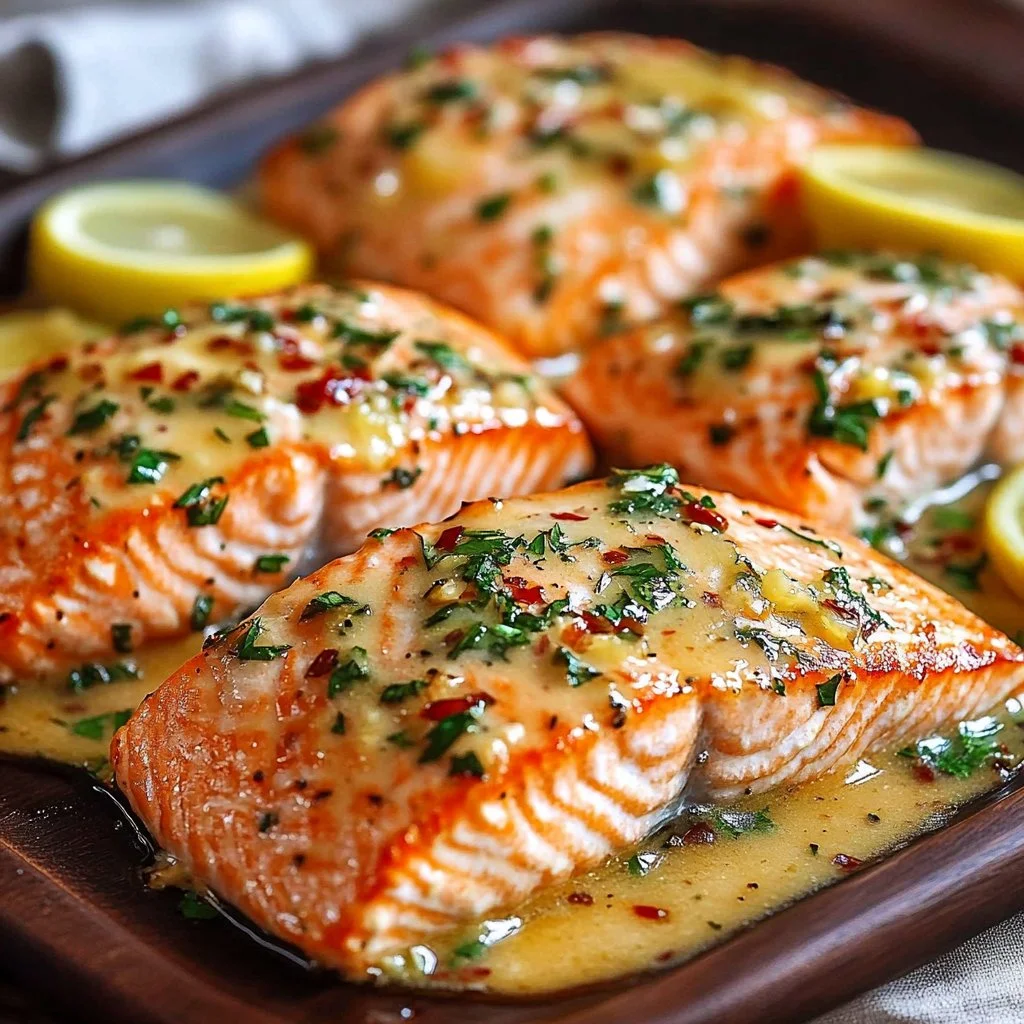
Baked Salmon
Ingredients
Method
- Preheat your oven to 400°F (200°C).
- In a medium bowl, whisk melted butter, olive oil, minced garlic, lemon juice, paprika, brown sugar, dried parsley, salt, and pepper until combined. Taste and adjust seasoning.
- Line a baking tray with foil for easier cleanup and arrange salmon fillets skin-side down with space between them.
- Generously brush each fillet with the butter mixture, coating the tops and sides. Reserve any extra for basting.
- Optional: Place a thin lemon slice on each fillet for added zest and an attractive finish.
- Bake for 12 to 15 minutes, depending on thickness, until the salmon flakes easily with a fork and reaches your desired doneness.
- Remove from the oven and spoon any pan juices over the fillets before serving.