

I still remember the first time I made fresh pasta following Gordon Ramsay’s simple formula — the dough felt silky beneath my palms and the noodles cooked in minutes. This recipe is a perfect gateway to handmade pasta: minimal ingredients, quick technique, and a texture that beats store-bought every time. If you enjoy rich, home-cooked pasta and want a fast weeknight winner, this is for you — and if you want a hearty sauce to follow, try this creamy chicken garlic Parmesan pasta for a satisfying pairing.
Why you’ll love this dish
Homemade pasta made from 2 cups of flour and 3 eggs is deceptively simple and incredibly rewarding. It’s quick to make, uses pantry staples, and gives you a tender, silky noodle that carries sauce beautifully. This recipe is great for weeknight dinners when you want homemade without a lot of fuss, for weekend cooking projects with kids, or when you want to impress guests with something authentically Italian.
“A small batch of fresh pasta changes a meal — the texture is delicate, the cooking time so short, and the flavor simply incomparable.”
Benefits at a glance:
- Fast prep and cook time compared with long-rise doughs.
- Flexible: shape it into tagliatelle, linguine, or sheets for lasagna.
- Budget-friendly: pantry staples, big payoff.
- Great for adapting to different sauces and toppings.
Preparing Gordon Ramsay’s Homemade Pasta
Step-by-step overview
- Mix flour into a well with eggs, oil, and salt to form a shaggy dough.
- Knead the dough until smooth (about 8–10 minutes).
- Rest, divide, and roll the dough into thin sheets with a pasta machine.
- Cut into your chosen shape and cook 1–2 minutes in salted boiling water.
This short overview will help you scan the process before you start and plan your workspace and timing.
What you’ll need
- 2 cups all-purpose flour (about 250 g)
- 3 large eggs
- 1/2 teaspoon sea salt
- 1/2 tablespoon extra-virgin olive oil
Notes and substitutions
- Swap up to half the flour for 00 flour or fine semolina for a silkier or slightly chewier texture. Keep total flour amount the same.
- If you need an eggless version, try a water-and-olive-oil dough, but textures and hydration will change; this recipe is optimized for eggs.
Step-by-step instructions
- Prepare your workspace: clean a large surface and have a bench scraper, fork, and pasta machine ready.
- Make the dough base: heap the flour into a mound and press a shallow well in the center. Crack the eggs into the well, add the olive oil, and sprinkle the salt into the eggs.
- Mix and form dough: use a fork to whisk the eggs and slowly pull flour from the inner walls of the well. Continue until the mixture is shaggy and starts to come together.
- Switch to hands: fold and gather the shaggy dough with your fingers until it forms a rough ball.
- Knead the dough: press and fold the dough for 8 to 10 minutes until smooth and elastic. If it’s too dry, wet your hands and add a teaspoon of water at a time. If sticky, dust with a little flour.
- Rest the dough: shape it into a ball, wrap tightly in plastic, and let it rest 30 minutes at room temperature. Resting relaxes the gluten and makes rolling easier.
- Divide and flatten: unwrap, cut into 4 pieces, and press one piece flat into a rectangle while keeping the others covered so they don’t dry out.
- Roll the dough: pass the flattened piece through a pasta machine on the widest setting, fold once, and repeat a couple of times to even the texture. Gradually reduce thickness settings until you reach your desired sheet thinness.
- Flour and store sheets: lay finished sheets on a floured baking sheet and dust them lightly with flour to prevent sticking.
- Cut the pasta: trim sheets and cut into ribbons or feed through the pasta machine cutter for tagliatelle, linguine, or other shapes.
- Cook the pasta: bring a large pot of salted water to a rolling boil, add the fresh pasta, and cook 1 to 2 minutes until al dente. Fresh pasta cooks very quickly; taste to check. Drain and serve immediately.
Best ways to enjoy it
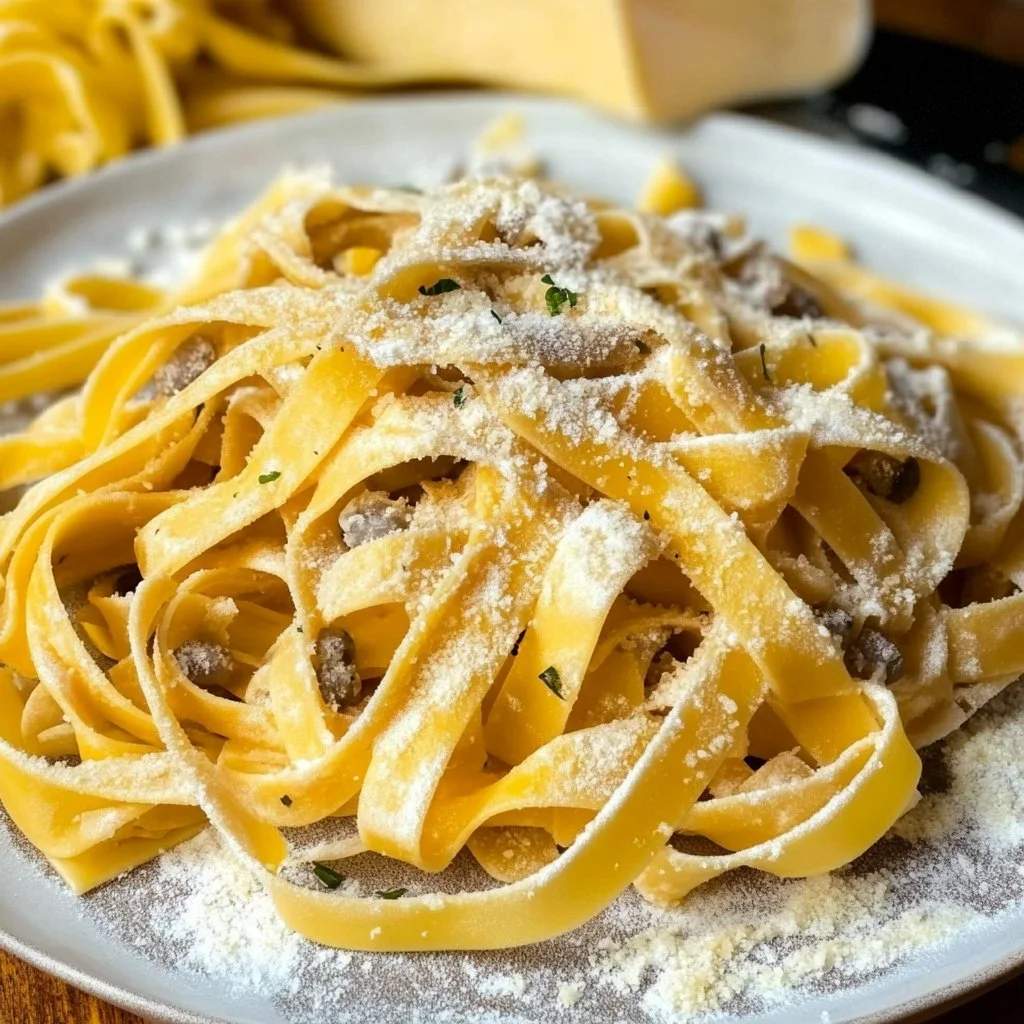
Serve these noodles with simple, high-quality toppings that let the pasta shine. Toss with a garlic-and-butter emulsion and plenty of freshly grated Parmesan. A bright tomato and basil sauce clings beautifully, as does a light cream or mushroom ragout. For a full meal, pair with roasted vegetables and a crisp salad — and for dessert, a light fruit shortcake makes an excellent finish; consider this homemade strawberry shortcake to round out the menu.
Presentation ideas
- Twirl tagliatelle into shallow bowls, spoon sauce over the top, and finish with grated cheese and fresh herbs.
- For a rustic look, pile wide noodles, scatter roasted cherry tomatoes, and drizzle with olive oil.
How to store & freeze
Short-term storage
- Cooked pasta: keep in an airtight container in the refrigerator for up to 3 days. Reheat briefly in simmering sauce or in a pan with a splash of water.
- Uncooked shaped pasta: refrigerate on a floured tray, covered with a clean towel, for up to 24 hours.
Freezing
- Flash-freeze fresh pasta on a floured baking sheet until firm, then transfer to freezer bags. Frozen pasta keeps 1–2 months.
- Cook from frozen by adding a minute or two to the usual cooking time; avoid thawing first.
Food safety
- Raw egg dough should not be left at room temperature longer than the recipe’s rest time. Refrigerate if you need to pause longer than an hour before shaping.
- Cook pasta thoroughly if you’re concerned about raw eggs.
Pro chef tips
- Knead with intention: steady pressure and folding produce a smooth elasticky dough. If you’re tired, use a stand mixer with dough hook on low for 5 minutes, then finish by hand.
- Keep covered: exposed dough dries quickly. Use a damp towel or cling film while working.
- Rolling rhythm: pass the dough through the widest setting a few times to make a uniform texture, then reduce thickness one notch at a time.
- Test one noodle: fresh pasta cooks fast — always taste a strand before draining.
- Light flouring: don’t over-flour the sheets or your sauce won’t cling as well. Use fine dusting only where sticking occurs.
Recipe variations
- Herb-infused pasta: knead in a tablespoon of finely chopped basil or parsley for color and aroma.
- Whole wheat twist: replace up to half the all-purpose flour with whole wheat for nuttier flavor; add an extra teaspoon of water if it feels dry.
- Short-sheet lasagna: cut the rolled sheets to size for quick lasagna layers.
- Stuffed pasta: roll thinner and use the dough to make small filled ravioli with ricotta and spinach.
Your questions answered
How long does this take from start to finish?
Expect about 60 minutes total: 10–15 minutes mixing and kneading, 30 minutes resting, and 15 minutes to roll, cut, and cook. If you’re rolling many sheets, allow extra time.
Can I make the dough ahead of time?
Yes. Wrapped tightly, the dough will keep in the refrigerator for up to 24 hours. For longer storage, freeze the dough ball in a sealed bag for up to one month; thaw overnight in the fridge before rolling.
What if my dough is too sticky or too dry?
Too sticky: dust your board and hands lightly with flour and knead in small amounts until manageable. Too dry: wet your hands and add water a teaspoon at a time, kneading until smooth. Aim for a pliable, slightly tacky dough.
Do I need a pasta machine?
No, you can roll dough thinly with a rolling pin and cut by hand into ribbons, but a pasta machine gives consistent thickness and speeds up the process.
How should I cook fresh pasta to avoid overcooking?
Use a large pot with plenty of boiling, salted water. Fresh pasta cooks in 1–2 minutes; start checking at 60 seconds. Remove when just tender and finish in the sauce for a minute if needed.
If you want more recipe ideas or desserts to serve after a pasta dinner, check the linked recipes above for inspiration.

Gordon Ramsay's Fresh Pasta
Ingredients
Method
- Clean a large surface and prepare a bench scraper, fork, and pasta machine.
- Heap the flour into a mound and press a shallow well in the center.
- Crack the eggs into the well, add olive oil, and sprinkle salt into the eggs.
- Use a fork to whisk the eggs and slowly pull flour from the inner walls of the well until the mixture is shaggy and begins to come together.
- Fold and gather the shaggy dough with your fingers until it forms a rough ball.
- Knead the dough for 8 to 10 minutes until smooth and elastic. Adjust moisture as needed.
- Shape into a ball, wrap tightly in plastic, and let rest for 30 minutes at room temperature.
- Unwrap, cut into 4 pieces, and flatten one piece while keeping the others covered.
- Pass the flattened piece through a pasta machine on the widest setting, folding and repeating a couple of times.
- Gradually reduce thickness settings until reaching desired sheet thinness.
- Lay finished sheets on a floured baking sheet and dust lightly with flour.
- Trim sheets and cut into ribbons or feed through the pasta machine cutter for shapes.
- Bring a large pot of salted water to a boil, add fresh pasta, and cook for 1-2 minutes until al dente. Drain and serve immediately.